

Words Vicki Ravlich-Horan Images Erin Cave
Mark Webster from Webster Tea says right from the beginning he had wanted to include New Zealand ingredients in their teas. Their Kawakawa tea was first. Mark explains: “I was aware of its medicinal benefits, which led me to research it further. Then I started noticing kawakawa everywhere! Around the base track of the Mount, growing wild wherever I looked. It felt like a no-brainer to incorporate it into a tea, and I thought it might pair nicely with green tea.”
“Kawakawa,” Mark explains, “is quite peppery, so we added spearmint to balance that out on a base of green tea.” Enthused by the response to this tea, Mark set his sights on mānuka, first blended with a Rooibos base and more recently their Kiwi Breakfast Tea.
Mark says the Kiwi Breakfast tea “came about because we’re big fans of black tea. We wanted to create something in the style of an English breakfast, but with a distinct Kiwi twist. The mānuka adds a subtle, unique aftertaste and some added benefits – mānuka can support immunity and has antibacterial properties while keeping it a hearty breakfast tea. I love that it’s still very much an English breakfast style, just with that local lift.”

Proving these teas would work and people would enjoy them turned out to be easier than sourcing the New Zealand native ingredients, which is why we have wound our way deep into the hills behind Whakatāne.
Our destination is Native Tree Farm, who now grow, harvest and process the kawakawa and mānuka Webster’s use in their teas. Mark says previous to discovering Native Tree Farm, supply of both kawakawa and mānuka was inconsistent both in quantity and quality. He had almost given up when he saw Native Tree Farm kawakawa powder in a local shop and sent them an email.
Dan Andrews laughs as he explains kawakawa is slow to process. “We were ceasing additional supply of kawakawa when we got Mark’s email, and it was so nice we couldn’t say no.”
Dan and wife Laureen began Native Tree Farm a decade ago. Their fourteen acres was an old airstrip and as Dan describes it “a blank canvas”. The pair, with a young family at the time, both had professional careers, Laureen a teacher, Dan in management.
But the land was calling. One summer they dreamed of selling flavoured corn at the market so tilled their entire suburban backyard to plant a corn crop. The corn was a disaster, but the pair were not deterred. Puha was next and more successful.
Then the opportunity arose to buy the land they now call home and they jumped at it, not really knowing what they would grow.
What did grow was their love of New Zealand natives and the power these plants have.
Laureen’s koro was the seed, an expert in native plants and their medicinal benefits. And with the gift of some special mānuka seeds from whānau, their first plantation was lovingly hand planted following organic guidelines.
Native Tree Farm is BioGro certified and now, along with mānuka, grows kānuka, kawakawa, horopito and kūmarahou. Along with selling some wholesale to Webster’s Tea, these are grown for their own teas, powders and essential oils and for sale on their website.
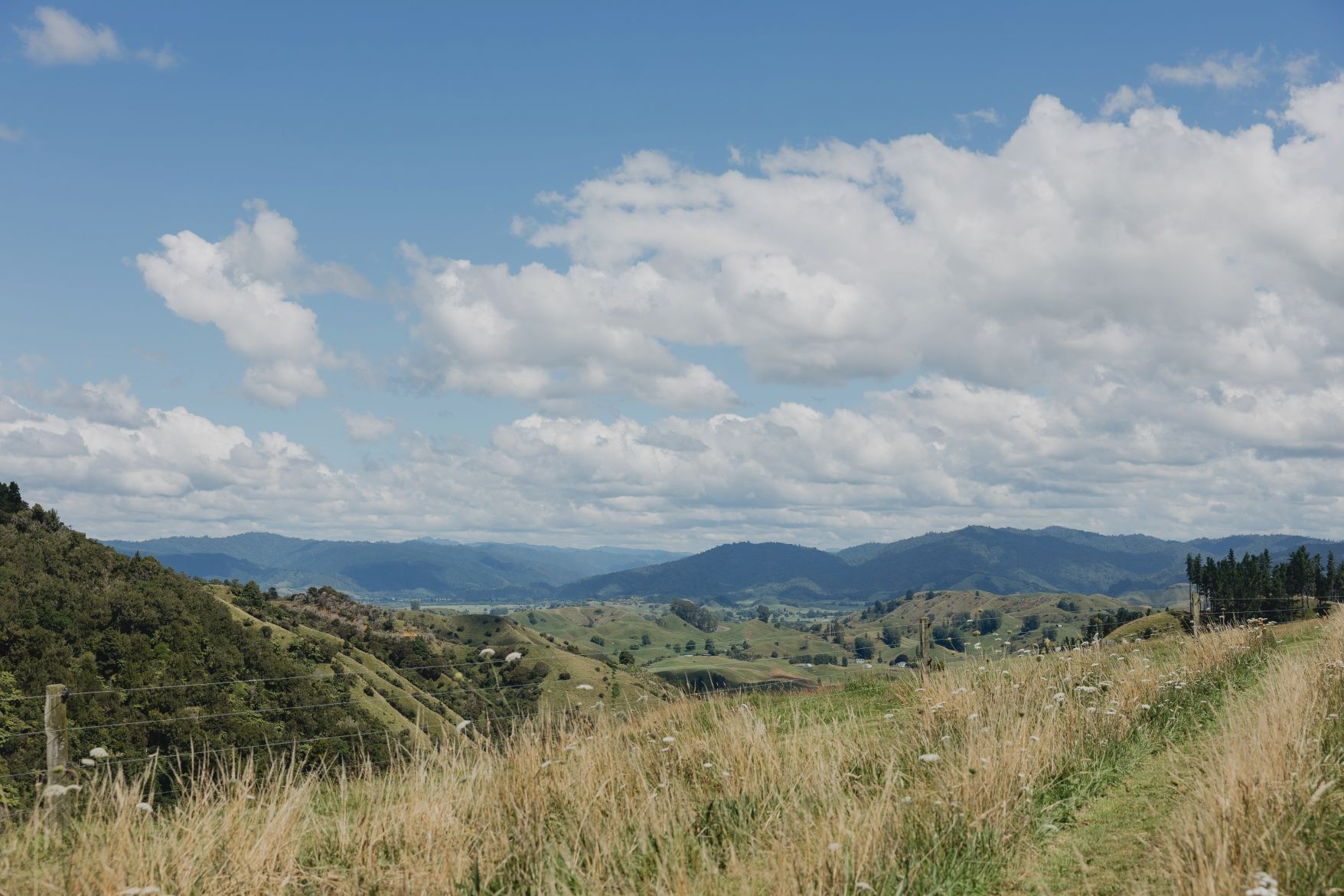
The old airstrip has slowly been transformed as the Andrews discover better ways to grow, harvest and preserve their growing range of natives.
As we sit chatting, Dan points out the rows of plants behind me. They are kūmarahou, a plant I had never seen or heard of before. Its yellow flowers create a naturally velvety lather, hence its nickname ‘gum diggers soap’.
But Dan says before the gum diggers arrived “it was one of the most esteemed plant for Māori”.
Because of its healing properties as a remedy for skin complaints, bronchial illnesses, cold and flu as well as digestive issues and that there is not much around, Laureen says “it is highly sought after”.
The fact that there is not much around, the pair discovered, could be that it is not easy to grow as a plantation (from seed). “We are starting to get our heads around it now,” admits Dan. This is the case for many of the crops they grow, which have been a case of trial and error.
Back to kawakawa and the difficulties plantation growing this plant that, as Mark witnesses, seems to flourish in the bush. Their current plantation growing under shade cloth are seedlings that have appeared in the mānuka rows, spread there by birds. This successful approach has Dan planning to expand the area under shade and a number of kawakawa plants.
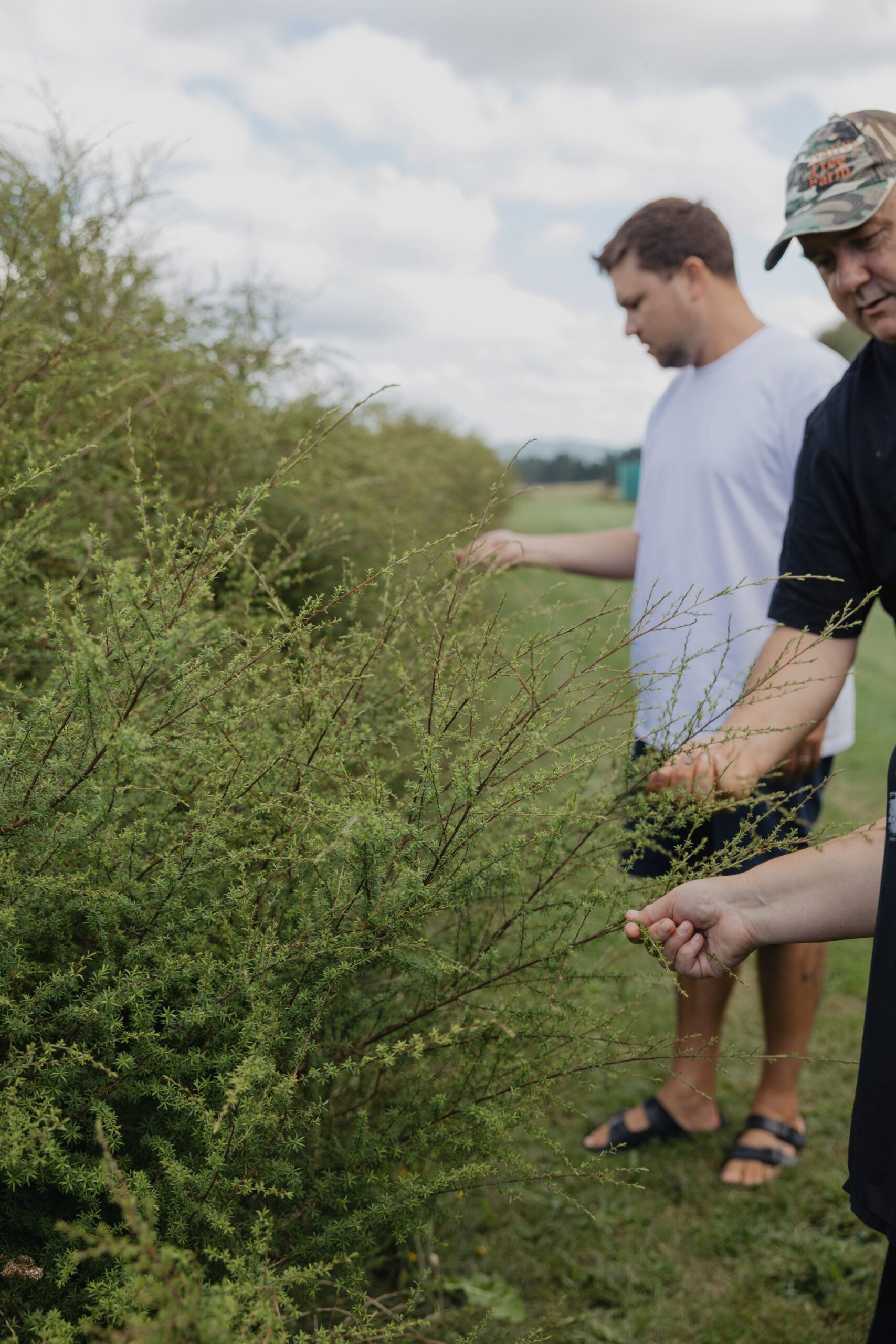
There are plans afoot to replant the mānuka to make it more manageable to harvest, which is all done by hand. As we wander the rows to see how this is done, Dan points out the kānuka, a plant that research is proving could match mānuka in many ways.
While mānuka is spikey, kānuka is soft and its leaves have a gorgeous, almost citrusy bouquet. I’d certainly buy some essential oil of that!
It’s clear Dan and Laureen have found a beautiful balance here as they marry science with traditional medicine, creating a business with a simpler way of life.
Discover more of Webster’s Tea at their Tea Shop (7 Clarke Road Te Puna, Tauranga) or online at websterstea.co.nz
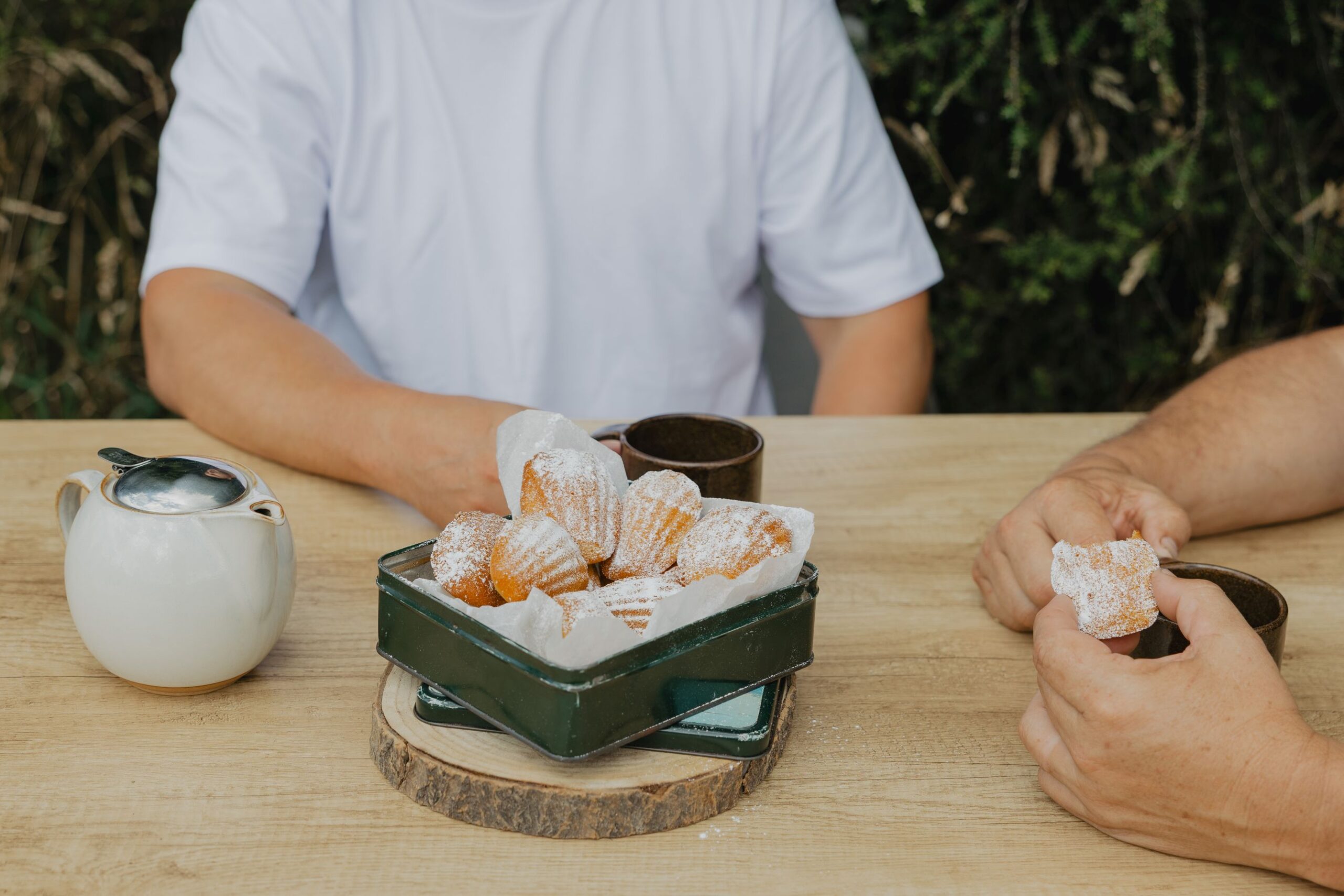
Click here for the Mānuka Madeleines we created using Webster’s Manuka Tea