




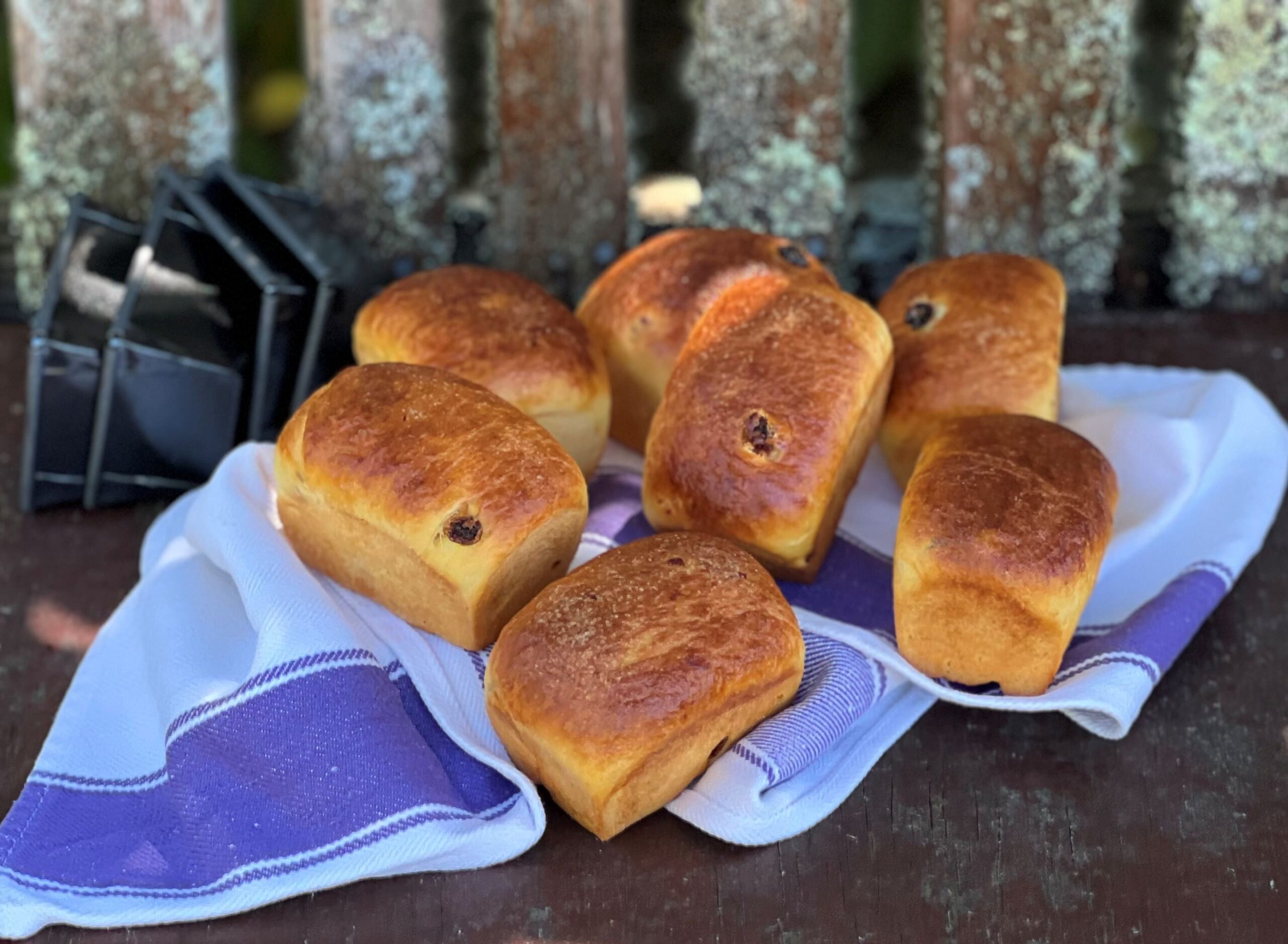
Recipe and images by Kathy Paterson
Best eaten not long from the oven, but any leftover loaves can be sliced and toasted the next day. They are particularly good sliced and toasted then spread with butter and orange marmalade. Loaves can be frozen too.
When you are working with yeast remember to always work in a warm, draught-free kitchen.
Here I have let the dough rise slowly overnight in the fridge until it has doubled in size, but you can forgo this and rise in the warm kitchen then proceed with shaping and baking.
Makes 12
Begin this recipe the day before.
1 orange
a good pinch of saffron threads
500g bread (or strong) flour
1 tsp salt
4 tbsp caster sugar, plus extra for sprinkling
2 tsp instant dried yeast (I use Edmonds all purpose active yeast)
150ml warm milk
100g butter, softened, plus extra for greasing
6 tbsp sultanas or raisins
1 small egg, lightly beaten
Peel the rind from the orange with a vegetable peeler, leaving behind the white pith, which is bitter. Blanch rind in boiling water, drain and rinse under cold water then dry well on kitchen paper. Finely chop and set aside.
Warm the saffron threads in a heavy-based pan, if wished. Remove from the pan and leave for a minute before crushing in your fingers into a cup. Warm 150ml water then pour half over the saffron and leave to infuse.
Put 1 tablespoon of the measured sugar in a small bowl. Sprinkle over the dried yeast then pour over the remaining warm water. Leave to froth (about 5 minutes). Note, if the yeast doesn’t froth after 5 minutes then begin again. I find water on the hotter side of warm works best, but not so hot it destroys the yeast.
Sift the flour and salt into a large bowl. Add the remaining sugar. Make a well in the centre and pour in the warm milk. Add the yeast mixture and cover in the flour from the sides of the bowl. Add the softened but not melted butter, the sultanas or raisins, orange rind and the saffron with its liquid. Mix together using a spatula.
Tip the dough out on to a lightly floured bench and knead until the dough is no longer sticky and is springy to the touch, about 10 minutes. (This can be done in an electric mixer with a dough hook).
The dough should be sticky to begin with. Use extra flour on your hands to help you knead. The softer the dough the better the end result will be.
Wash and dry the bowl then very lightly oil. Put in the dough, turn over to coat surface in a very thin film of oil. Cover bowl (I use compostable plastic wrap and a clean tea towel). Put in the fridge and leave overnight to rise until the dough doubles in size.
The next day, remove the dough from the fridge and bring back to room temperature.
Put 12 mini loaf tins in a large shallow baking tray. Lightly grease each tin.
Tip the dough on to a lightly floured bench and knead once more for a few minutes. The dough should feel warm to the touch. Cut dough in half and then each half into 6 pieces. I like to weigh each piece so the loaves are of even size and bake evenly.
Shape each piece into a loaf shape and put in each tin. Brush with the egg wash and sprinkle with extra sugar. Cover loosely again with compostable plastic wrap and a thin tea towel. Leave until the dough rises just to the top of the tins and has a lovely loaf shape.
Meanwhile, heat the oven to 200°C.
Once the loaves have risen sufficiently, remove covers and put loaves in the oven. Bake for 12–15 minutes until the tops are well browned.
Remove from the oven and tip a loaf from its tin and tap the bottom. If baked well it should sound a little hollow.
Serve warm with butter.
Tip
For a more pronounced orange flavour, omit blanching and simply finely grate the zest of the orange.