


Words and images Vicki Ravlich-Horan
A few years ago I was introduced to Dumpling House CBD Express on Bryce Street, or perhaps more specifically to a couple of their dishes I would never have ordered had I not got the inside word. Known, as their name would suggest, for their homemade dumplings, I would argue their crispy eggplant and pork are the real hero dishes.
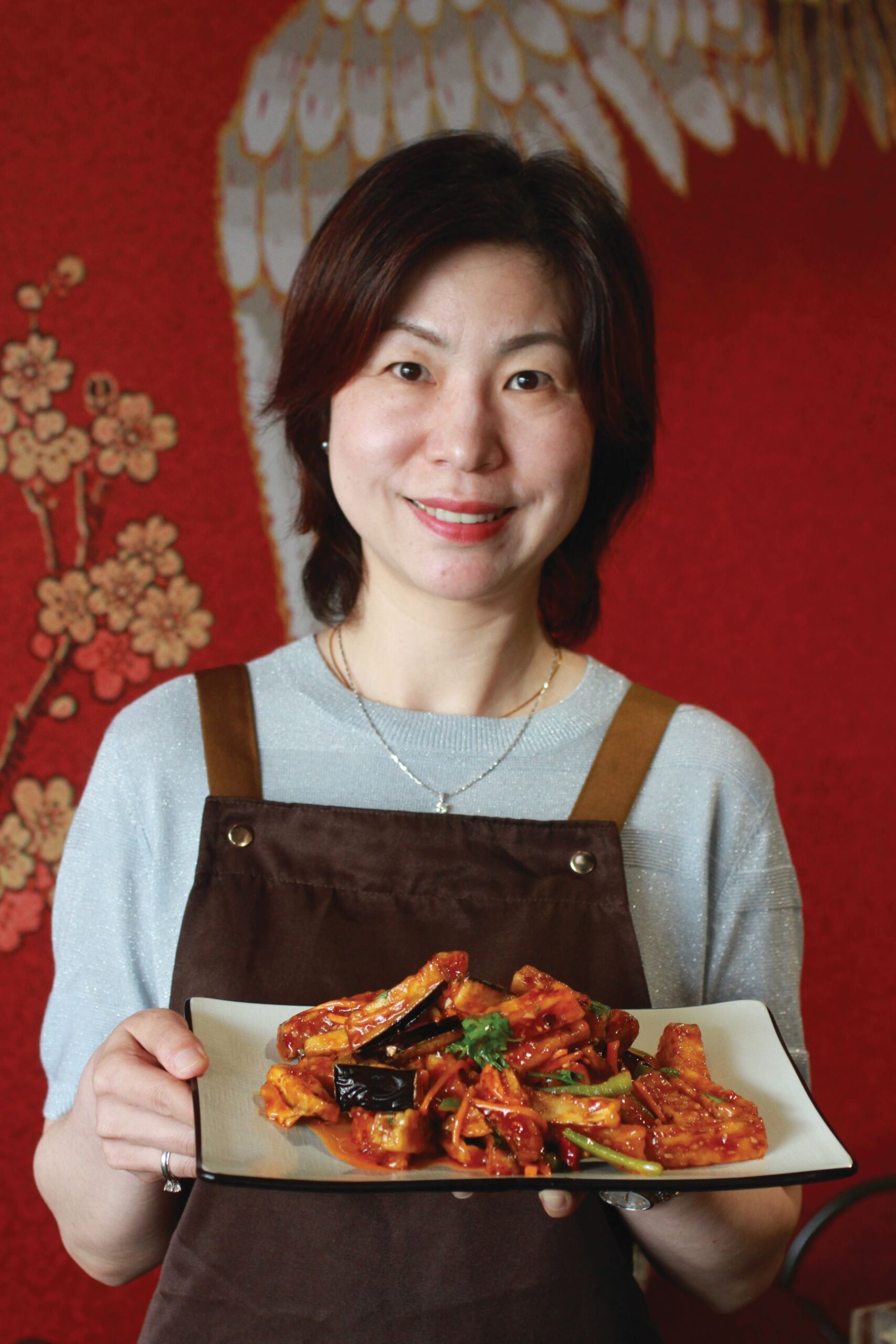
The Crispy Fried Sweat Lean Pork (A1 on the menu) is outstanding, but the Special Sweet and Sour Eggplant with garlic and coriander (V2 on the menu) is the most surprising delight.
Eggplant is a misunderstood vegetable in New Zealand. We rarely give it the spotlight and we almost always don’t cook it well. But if you experience eggplant cooked the traditional way from cultures that understand this beautiful vegetable, you may just change your mind. Eggplant in Sicily is almost always sensational and the key ingredient of the national dish, caponata. This dish from Lei Wang’s home region in North Eastern China is another example of a dish that will have you jump on the eggplant bandwagon.
Back home Lei explains the eggplant variety would be different and only available in the warmer months. Her hometown of Harbin is very cold, with winter lasting six months, not conditions for growing eggplant. Lucky for us, eggplants are available all year round, and so too is this dish at Dumpling House.
Lei admits it’s not a dish often ordered by non-Chinese customers but is very popular with Chinese clients who know it is a specialty dish. So what makes it so special? Lei says the key is for the eggplant to be light and crispy but not oily. I think the genius is most definitely the texture of the eggplant.
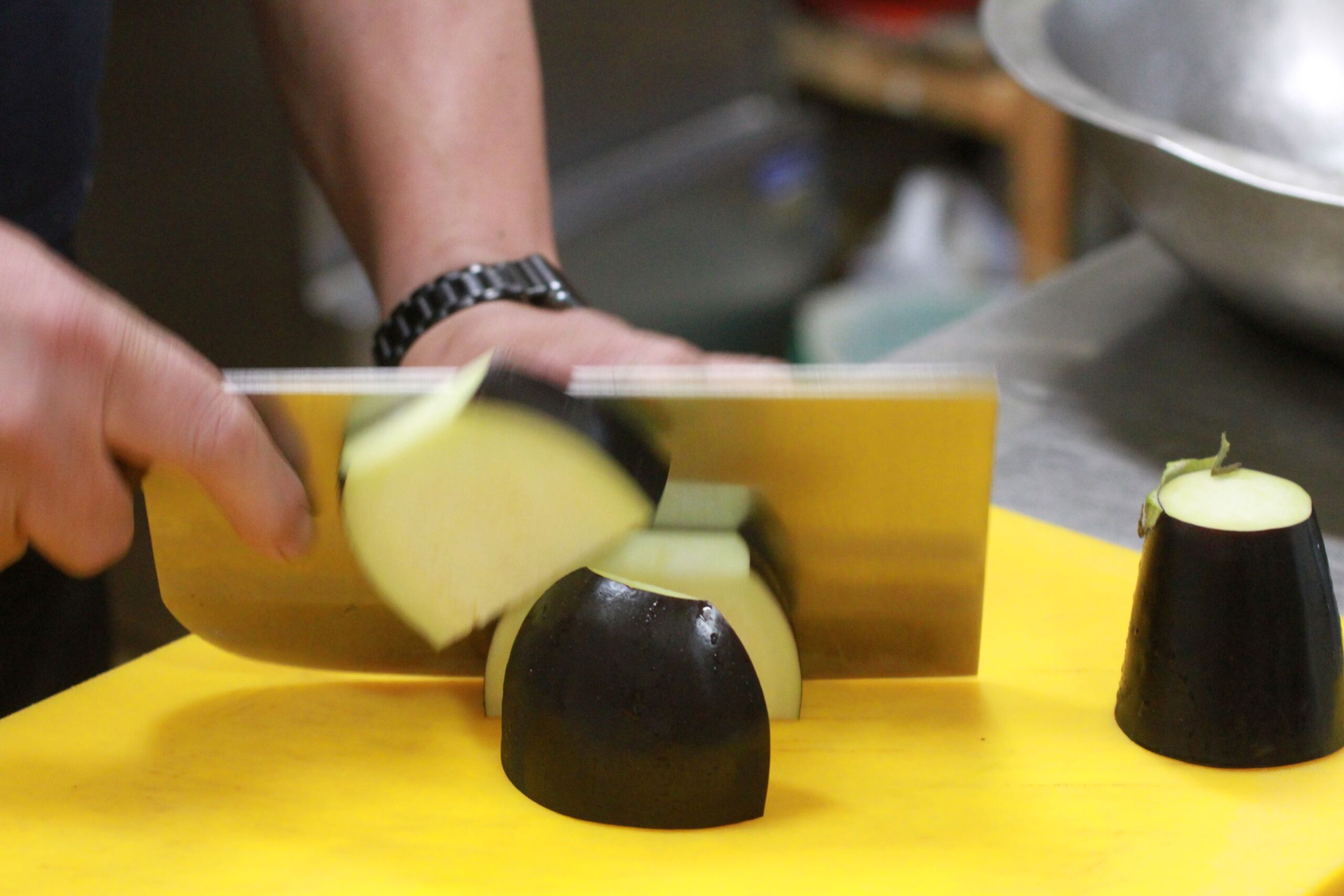
Firstly, the eggplant is hand cut into strips, around 1cm x 3cm. Lei says the size is important as it affects the cooking. “Not too big and not too small,” she warns.
Then the eggplant is washed thoroughly before being tossed well in cornflour so it is well coated.
The eggplant is then deep fried at 180°C for a few minutes.
While the eggplant is draining, the sauce is made. This is a secret that Dumpling House want to keep, but it begins with ginger and garlic sautéed in the wok with julienned carrot. Sugar, honey, oyster sauce, soy sauce, sweet chilli and rice wine vinegar are added to make the sauce. Dried chilli, chilli oil and sesame oil are also added at the end along with coriander.
Before the sauce is finished, the eggplant is fried again, this time at 190°C, before it is drained and added to their special sauce.
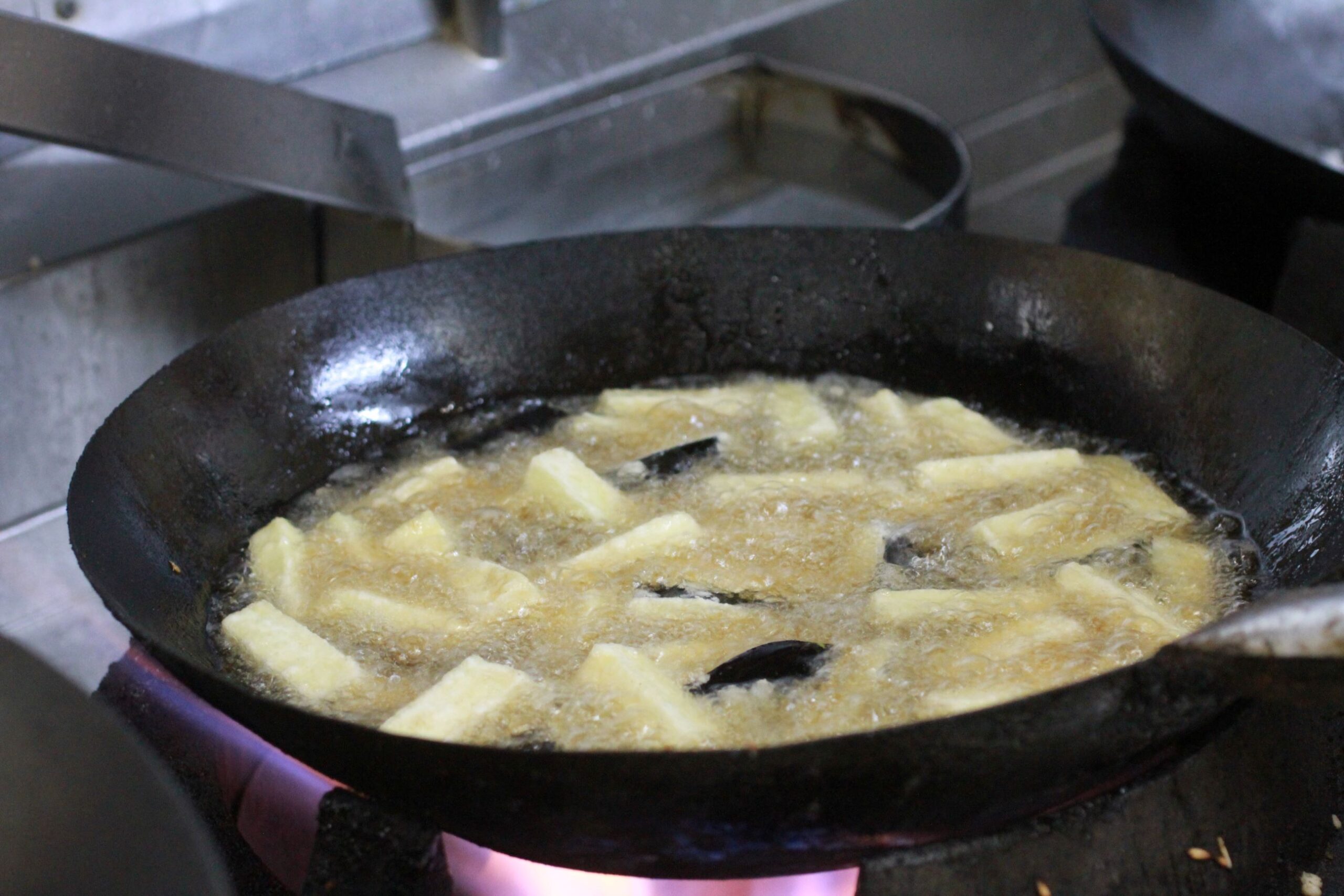
With the double fry, the process is much like that of making the perfect French fries. The difference, Lei says, is that the process has to be done to order, so no prepping ahead by pre-slicing, washing, coating and frying the eggplant.
And because this dish is all about the texture of the eggplant, I also warn against getting it to take away! The last thing you want is the chef’s hard work in creating the light crispy eggplant to go to waste as it steams in the takeaway container on your way home. If enjoying the eggplant from Dumpling House do so there, and while you are there enjoy the crispy pork and some of their famous dumplings or be adventurous and order something you don’t recognise – you might just be rewarded with a new favourite dish.

I was privileged to be able to go into the kitchen and watch the dish being made. Lei says every chef will have their own interpterion of the sauce, some more sweet, others more spicy, the real key is how they get the beautiful texture of the eggplant – light and crispy but with a gorgeous soft flesh.