


Words and images by Vicki Ravlich-Horan
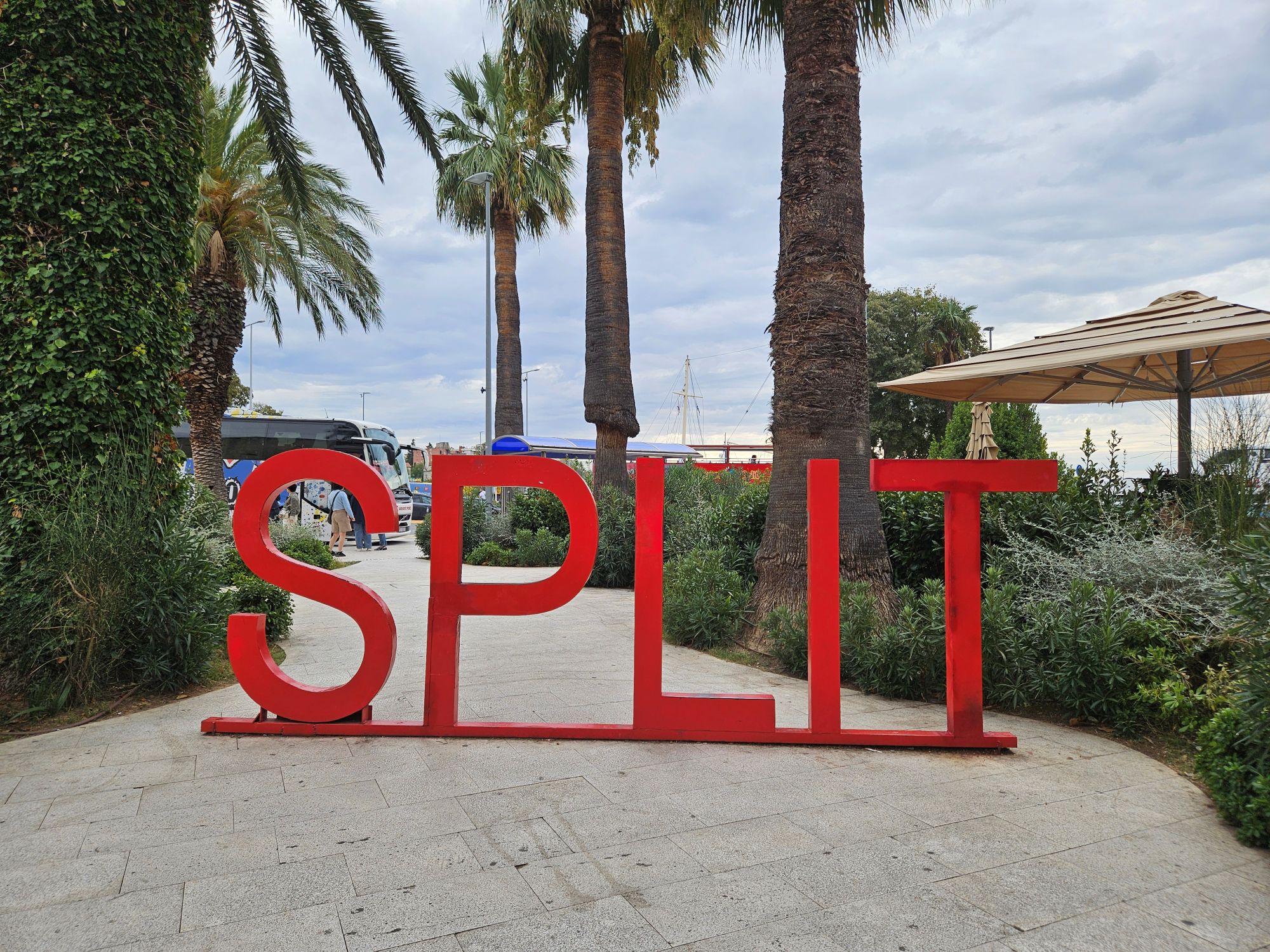
My first night in Split was not ideal. Delayed flights ending in lost luggage meant I arrived around 9pm needing to buy the basics – toothpaste, deodorant and clean undies! Luckily this is Europe and even on a Monday night the town was still buzzing.
With the essentials sorted I was hungry but exhausted. So I stumbled into a pastry shop around the corner from where I was staying. My first bite in Split was from St Burek, which turns out is one of the best places in Split to enjoy burek – a crispy, thin, flaky filo-like pastry that incases various fillings, traditionally cheese or beef, but now any number of ingredients.
Burek is not technically Croatian. This Balkan pastry originated in Bosnia and Herzegovina, but let’s remember 40 years ago they were all Yugoslavia. Pekara (aka bakeries) are in abundance in Croatia, with pastry products making up the core range, which explains why the population adopted burek as their own.
I first visited Croatia as a backpacker 25 years ago. Split was a very different town! I would most definitely not have been walking around the old town alone at night. The war between Serbia and Croatia (1991–1995) had not long ended and the country still wore the scars for all to see. Tourism had not recovered, with only a few, mainly German tourists, returning to enjoy the beautiful coast of Croatia. Schnitzel dominated restaurant menus.
A lot has changed in a quarter of a century and Split’s transformation from a scary port town to a tourist hub is proof positive of this, so are the menus of local restaurants.
Split, Croatia’s second largest city, is the perfect spot to base yourself, either to explore Krka National Park or the many surrounding islands.
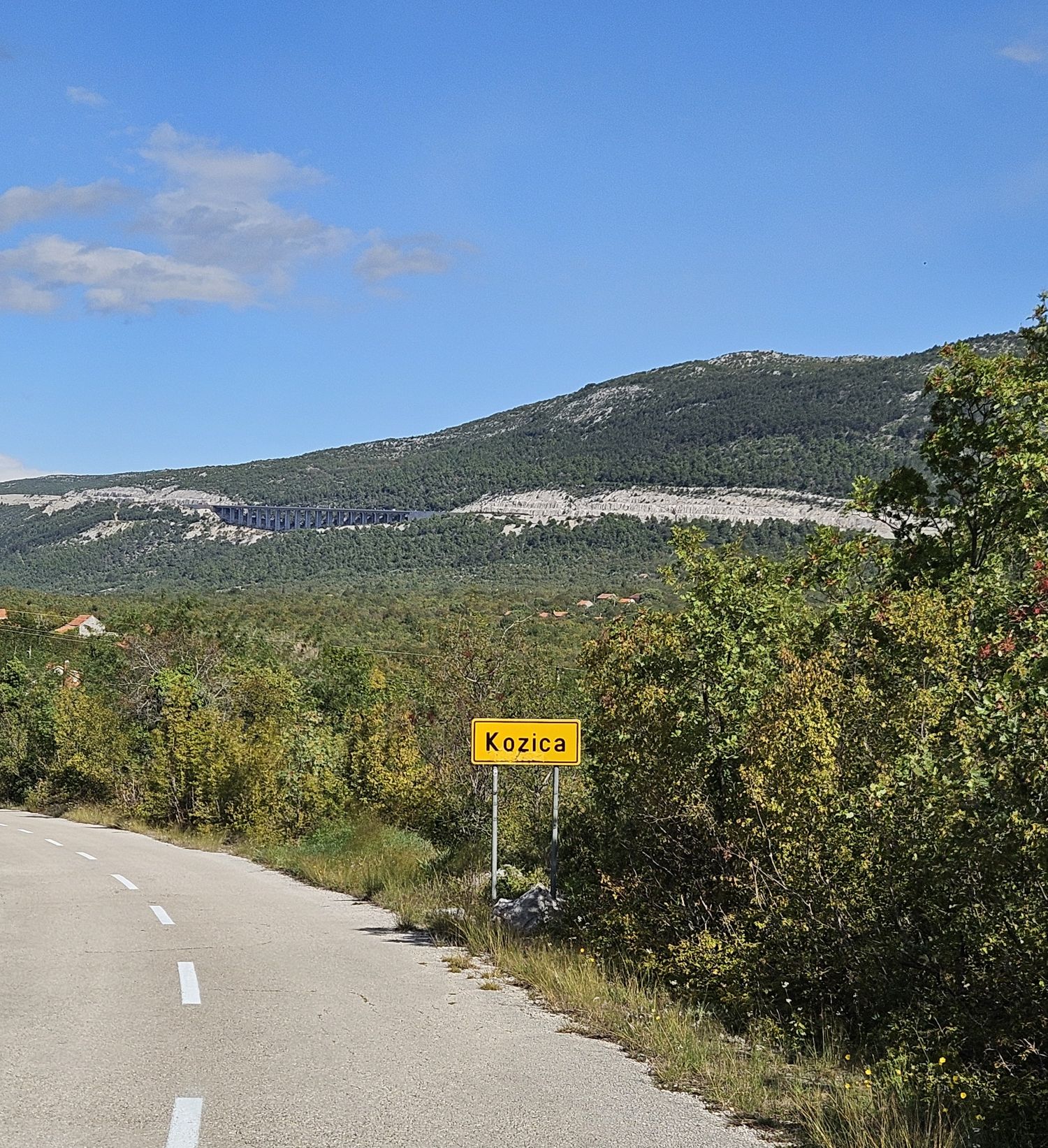
I was here to visit my Pop’s village. Ivan Ravlic left what was to become Yugoslavia at the end of WW1 and found his way to New Zealand. Growing up, Nan and Pop and my mum and dad were the only Ravlich’s in the phone book. So imagine what it was like to discover that one in every eight people from his village were Ravlic’s!
Sadly, what I found was that Kozica (Pop’s village) is now home to only around eight houses. Many left when Pop did, apparently many ending up in Western Australia and South America. More left again in the 90s. In fact, Croatians continue to leave. Now part of the EU, their young people seek better futures throughout Europe.
So while I didn’t meet any relatives when I drove to Kozica, the airport attendant’s (who found my bags) mother was a Ravlich from Kozica!
Bags found and my mission to drive to Pop’s village achieved, it was time to rediscover and enjoy Split.

Dominating the old town of Split is Diocletian’s Palace, the retirement village for Roman Emperor Diocletian.
Diocletian was an interesting character. His origins are often disputed, but it is believed he was born in Solin, less than 10kms from Split. His father may or may not have been an emancipated slave. What is not disputed is Diocletian’s rise through the army, culminating in beating his adversary for supreme rule in 284AD.
These were turbulent times for the Roman Empire, which was on the brink of collapse. Diocletian is attributed to implementing a number of changes and restoring order, which saw the empire continue for another 150 years.
But it is perhaps what Diocletian did after being an emperor which brought him eternal fame. The first Roman Emperor to abdicate, he commissioned the Diocletian Palace to be built for his retirement.
Taking 10 years to construct, this fortress-like palace is 30,000 square metres and includes military barracks as well as the emperor’s residences. Facing the sea, it is said Diocletian could pull up in his ship.
Considered one of the most imposing Roman ruins, Diocletian’s Palace is the old town of Split and one of its main attractions. Staying in the old town is a must. It is the city’s living heart, with a labyrinth of alleyways that could just as likely lead you to an intriguing piece of history as a hidden courtyard or cocktail bar.
In the centre of the palace is Peristil Square. Here you can marvel at the Roman architecture with its grand Corinthian columns framing the square. This is a spot to start your palace explorations but also one to come back to because, as it probably was in Diocletian’s time, it is a great gathering spot. It is a meeting place, a spot of art exhibitions, open air concerts and theatrical performances. Bars scatter cushions on the steps for you to enjoy an aperitivo and a platter of local cured meats and cheese while watching the world go by or marvelling at the history all around.
One such marvel is the Sphinx perched on a ledge. This 3500-year-old Sphinx is the only surviving, of 12, brought from Egypt by Diocletian.

Behind the Sphinx you will spot St Domnius Cathedral whose bell tower is the tallest in Dalmatia. Impressive as the bell tower is, it was a later addition, and the real interest lies in the story and twists of history behind the church’s walls.
Originally built as Diocletian’s mausoleum, his body was interred there on his death in 316AD, where it remained until the seventh century. Diocletian had overseen the longest and most severe persecution of Christians in Roman history, including the execution of bishop Dominius from his hometown Solin.
The martyr Dominius became a saint and in a twist Diocletian did not anticipate, St Dominius became the patron saint of Split and it is his body that now rests in the cathedral.
From Peristil Square head towards the sea and walk through the vestibule. This rotunda with an opening to the heavens was once the entrance to the imperial residence. It is now the perfect spot for a photo op or, if you are lucky, to enjoy traditional Klapa singers making the most of the acoustics.
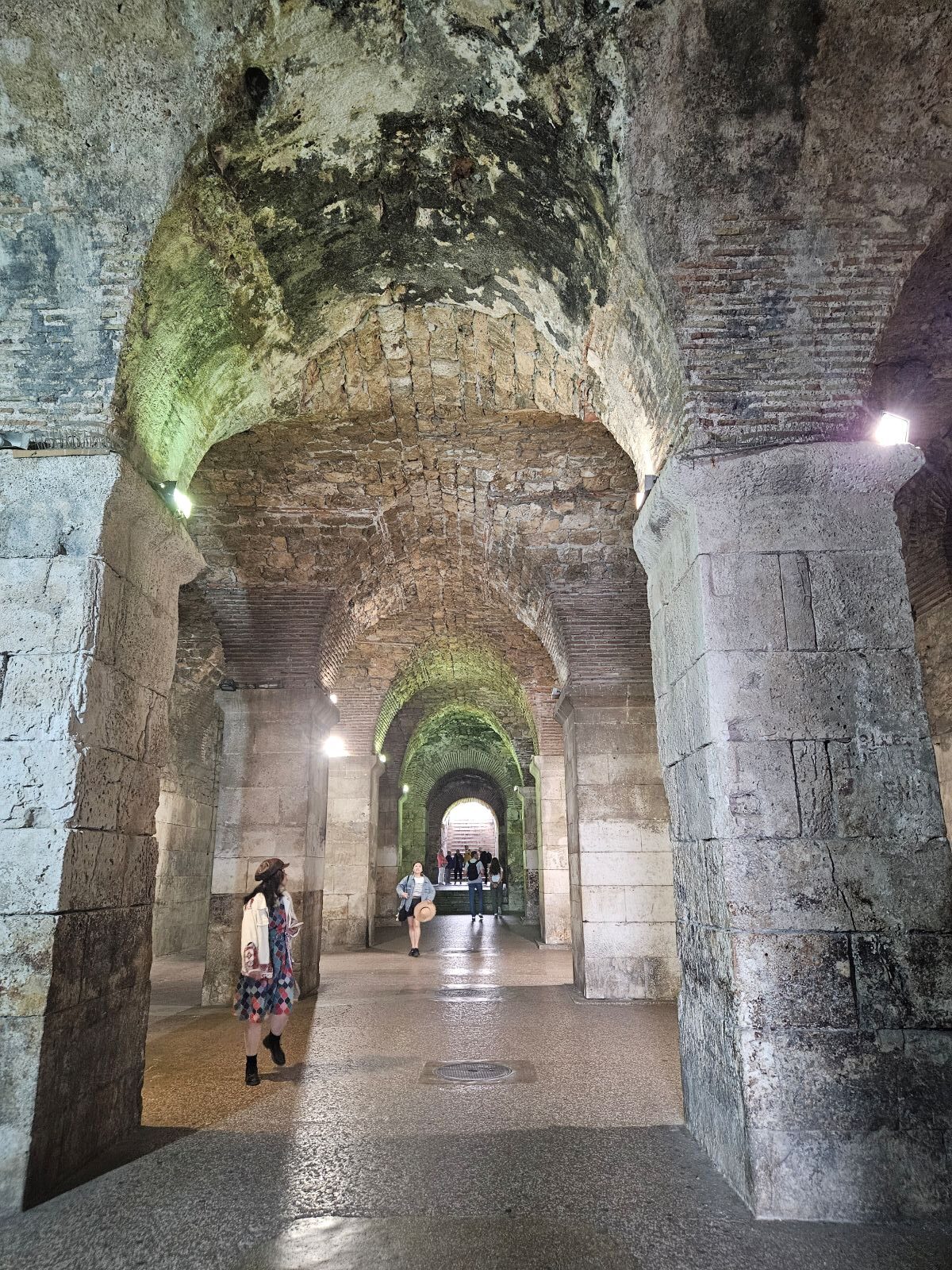
Carry on further and descend into the basement of the palace and some of the best-preserved parts of the palace. For Game of Thrones fans this was the spot where Daenerys chained her dragons in a crypt-like dungeon.
The basement has had many uses over the centuries, including as a rubbish dump. Originally it was a substructure designed to elevate the emperor’s apartment above sea level.
Coming out of the basement you arrive at the Riva, or waterfront promenade. Here you will find restaurants and bars and often a market with local crafts and souvenirs. It’s also here you can spot the hoards of cruise passengers disgorging or where you catch a ferry to nearby islands.
Just outside the palace walls is the green market (Pazar). This open-air market is open every day and is possibly one of the most authentic farmer’s markets I have been to. Visit early to get a real local experience. Don’t expect much English to be spoken, but it’s amazing how much a smile and some hand gestures can get you. When I visited, local plums and sweet figs were in abundance.
On the other side of the palace is the fish market (Peskarija). Open from 6.30am every day, it’s well worth a visit to see the abundance of sea life the Adriatic Sea offers.
A covered affair, this one is located near naturally occurring sulphur springs, which repels the flies. It is said Diocletian chose Split for his retirement because of the sulphur springs, which helped with his arthritis.
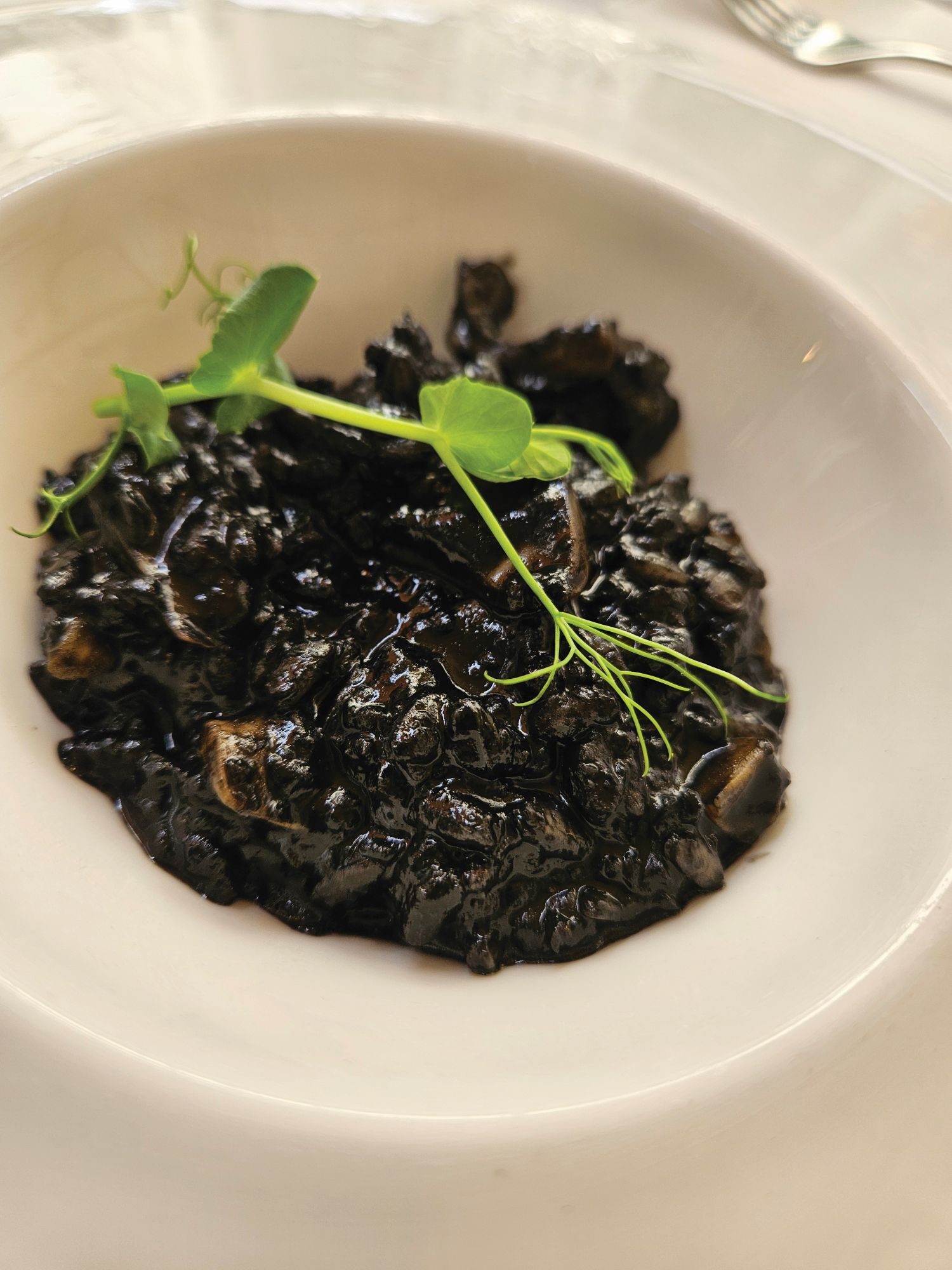
Not for me, but for seafood lovers Crni Rižot is a must try dish in Croatia. The black risotto is made from cuttlefish, and I am told delicious. It’s not the colour that put me off but the seafood (yes, it’s true, I am not a seafood fan). If in Split, seek out Makarun, a restaurant and hotel hidden in a private courtyard in the old town for one of the best versions of this iconic dish.
Just around the corner from the fish market is Kantun Paulina, who has famously been serving up ćevapi since the 1960s.
A common street food in Croatia, ćevapi are small meat koftes served in a pita or bun with raw onion and ajvar (roasted pepper relish). Instead of pita, Kantuna Paulinaomes in the fluffiest bread bun.
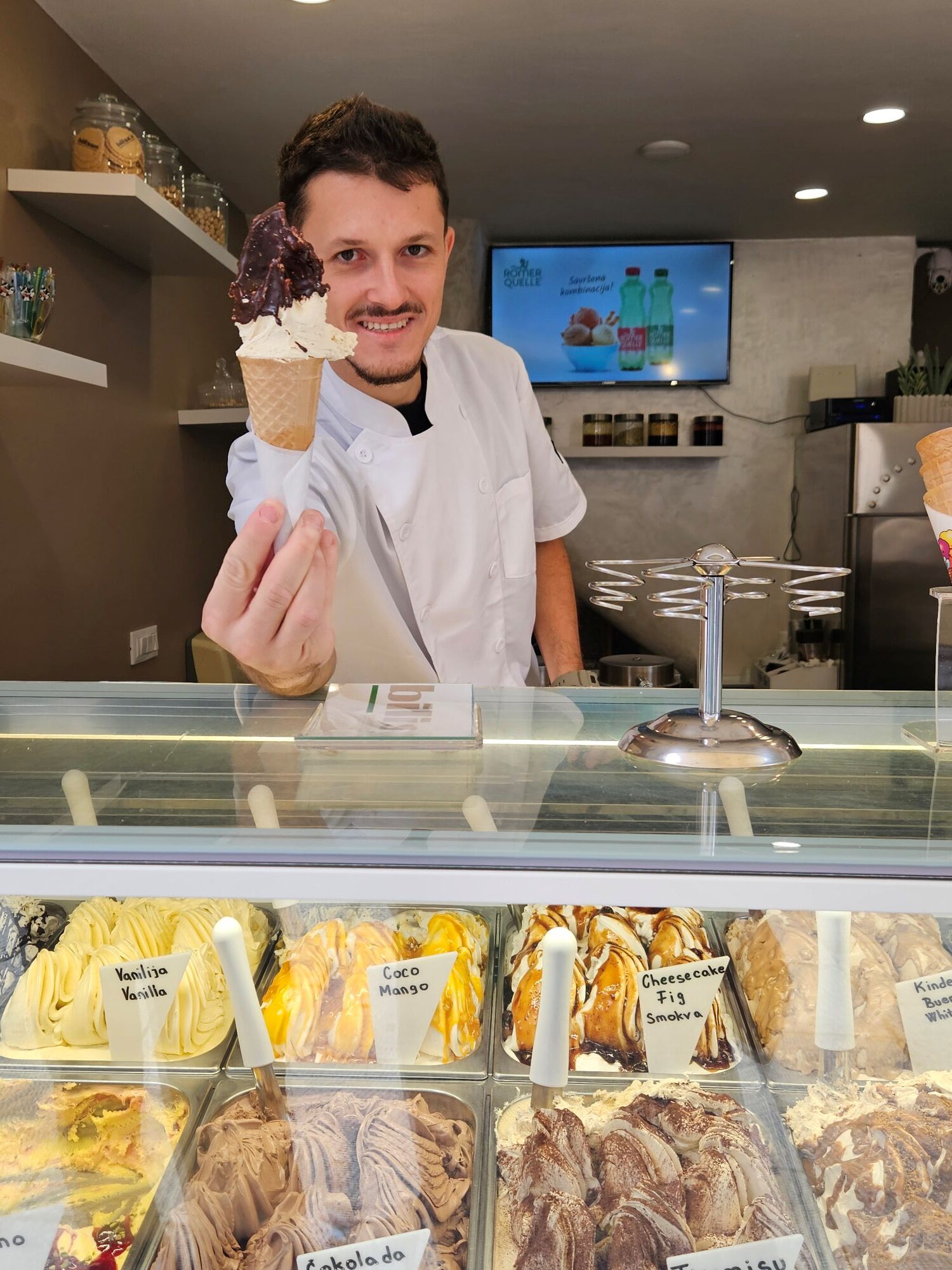
I swear there are more gelato stores in Split than in Italy! I’m not really an ice cream girl, but when in Rome, or in this case Split … Bili San is a local favourite and uses only the best ingredients. And if you are in the know you ask for a chocolate dip.
I was also enticed to try a cone at Geleteria Emiliana, as it was on the corner by my accommodation and I would walk by it five or six times a day. With an open kitchen you can see the gelato being made before your eyes. I went for the chocolate, rum, and cherry.
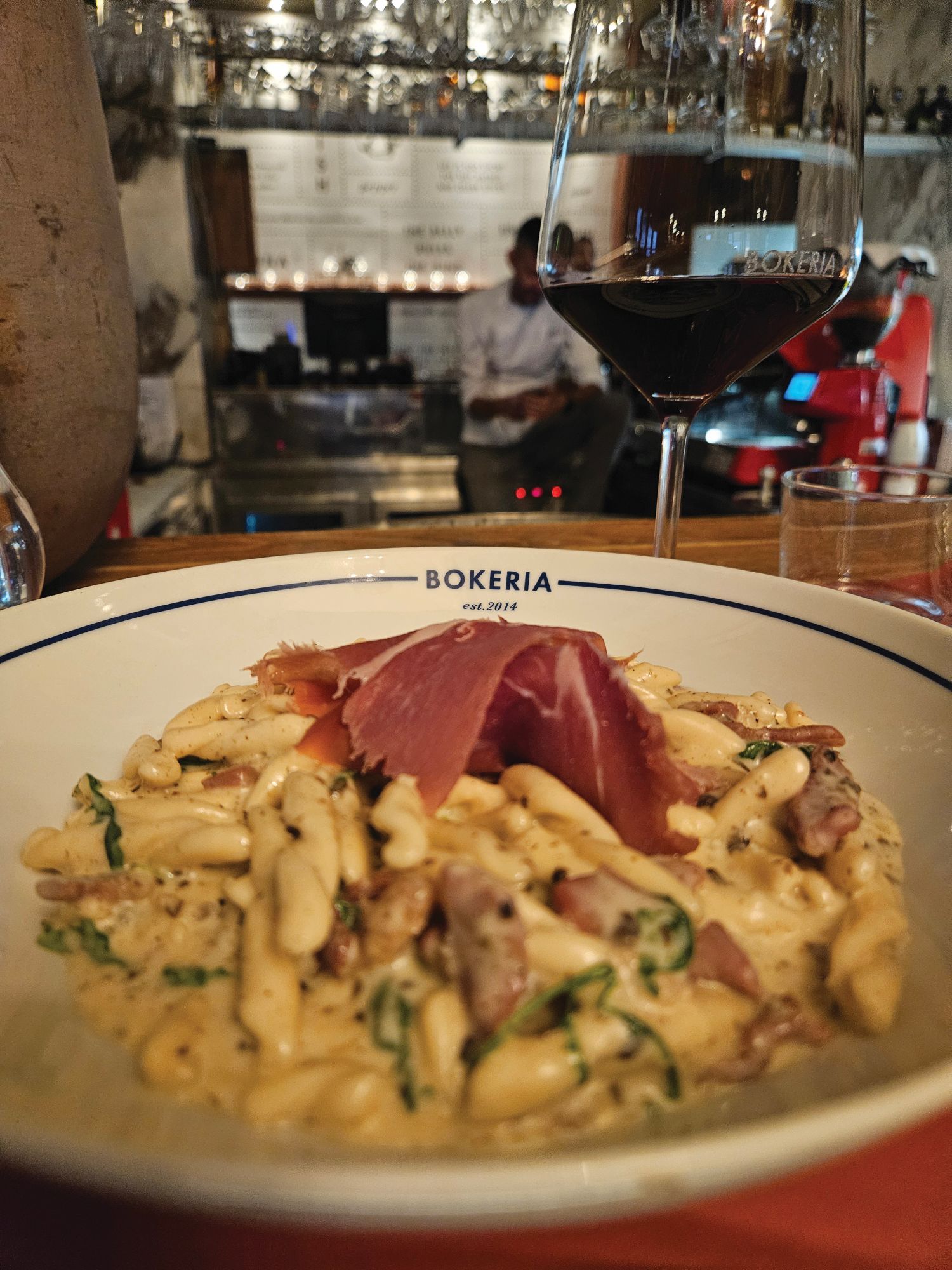
On my last night in town, I sat at the bar of a buzzing restaurant and realised I truly am Croatian. I ordered a local pasta with truffles and pancetta washed down with a glass of local Zinfandel and was in heaven.
Quite rightly the Zinfandel is probably not the best match for a truffle dish, but it is my favourite wine variety and I came to learn its origins are Croatian, not Puglia, as I had thought.
Istria in northern Croatia is known for their truffles, while the local salty pancetta is also made in the north of the country where it is air dried. Together with the pasta from the Romans, you have a perfect dish (in my opinion).
Want a real taste of Croatia? Join me in June on our Taste of Croatia tour – just six spaces left!