


Words Vicki Ravlich-Horan
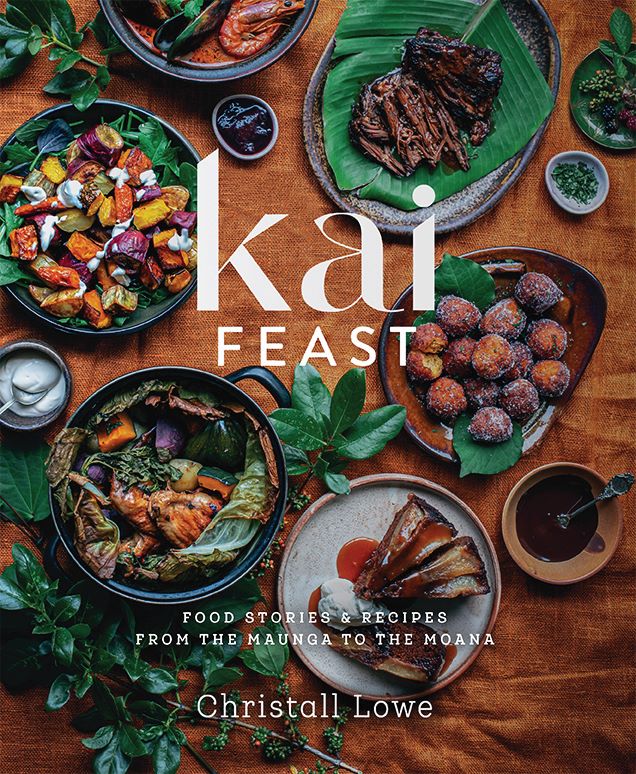
When Christall Lowe’s long anticipated second book arrived at my place it caused quite a discussion. I left it sitting on the dining table and my husband was leafing through it. “Is this a Māori cookbook?” he asked. “No, it’s a New Zealand cookbook” was the abridged version of my response.
He may have got a lecture on what is Māori food versus New Zealand food versus Pākehā food, and that New Zealand needs to stop trying to label or define dishes by culture. Look around the world, no one else is caught up in this need for label of origin – except in the supermarket, and I’m in favour of that, but I digress.
The point is, Christall has not set out to make a Māori cookbook, she just happens to be of tangata whenua decent and thus her food heritage, like many Kiwis, is intertwined with smoky flavours from the hangi, fresh seafood, and delights like that of fry bread. And this is what makes it a true New Zealand cookbook, full of food memories and recipes that can only come from a Kiwi, from Nana Rata’s pikelets served with golden syrup to ham hock soup, feijoa fritters to creamed paua pies.
This book speaks to our food heritage as a nation as well as its future, as Christall adds dishes and flavours that would be new to her pop, who the book is dedicated to.
Christall says it best: “My ultimate desire is to take readers on a journey, deep into the heart of our kai, through storytelling that uses both words and imagery to convey a kōrero that resonates with people. Recipes and stories brimming with nostalgia, seasoned with history, whakapapa and mauri, imbued with time-honoured traditions. These stories are all woven and held together by a central thread – that kai connects us. All kai connects people to each other, to the land and creates a sense of place. Every person, from every culture, has a food story. Stories about who we are, where we are from and where we are going.”
This book will take pride of place in my collection, not just for its recipes but for what it represents – the coming of age of New Zealand food.
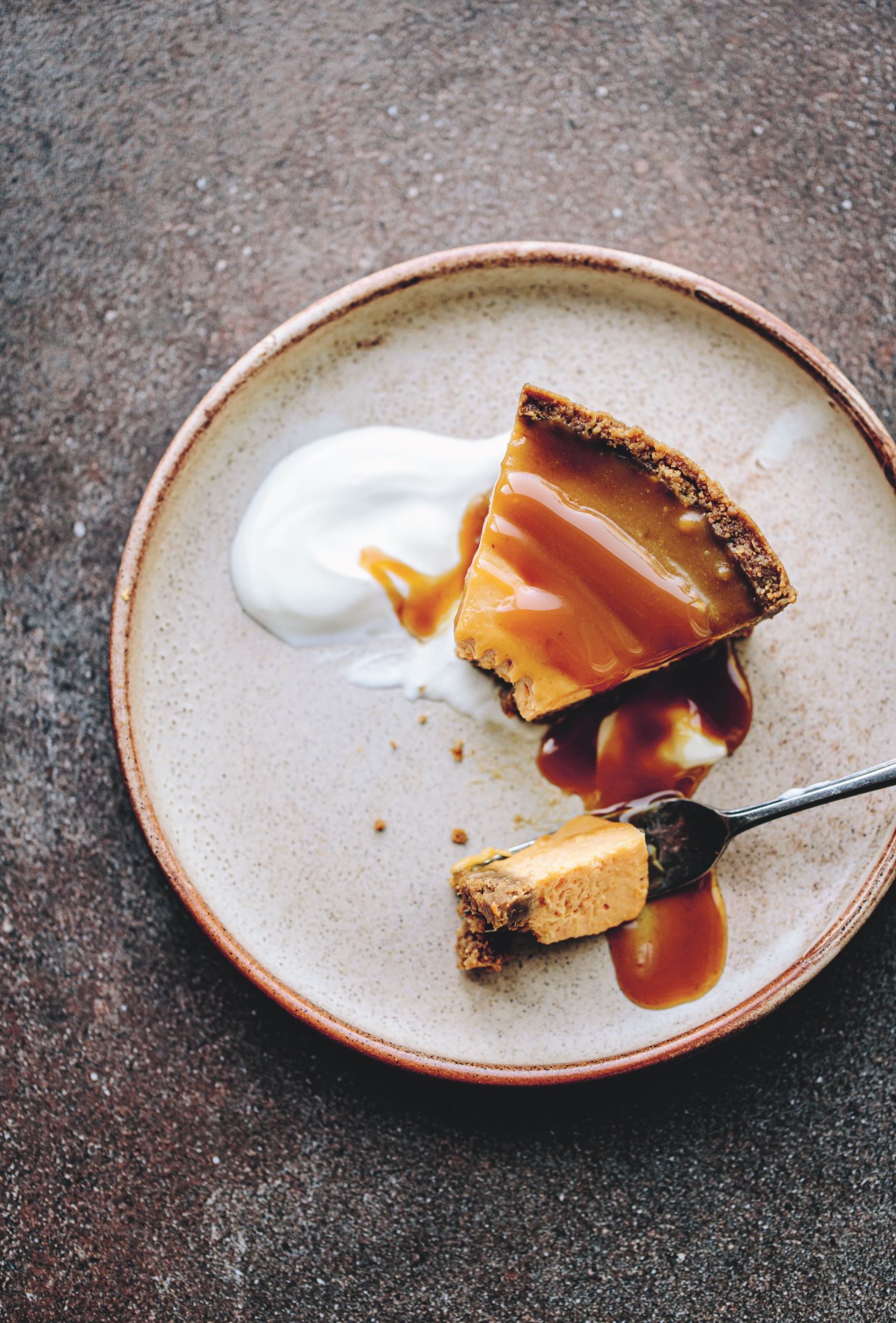
KŪMARA GINGER CRUNCH CHEESECAKE
This is what I consider the cream of the crop when it comes to dessert. Sweet orange kūmara meets cream cheese, orange zest, crushed Gingernuts and golden syrup in this wonderful mash-up of a classic cheesecake and a Gingernut cream log. (Remember those?! Bring back the 90s!) Kūmara cheesecake with a ginger-crunch twist? Pure nostalgia in every bite. Move over pumpkin pie: kūmara pie is in the whare.
FOR THE CRUST
500g (2 packets) Gingernut biscuits
200g butter, melted
FOR THE FILLING
2 medium orange kūmara (450g), to yield 2 cups cooked, mashed kūmara
250g cream cheese, softened
¾ cup plain Greek yoghurt
¼ cup icing sugar
1 tbsp orange zest
2 tbsp freshly squeezed orange juice
FOR THE GINGER CARAMEL
75g butter
1 cup brown sugar
3 tbsp golden syrup
½ cup cream
½ tsp salt
1–2 tsp ground ginger
Peel and cube the kūmara and boil in a saucepan with water until tender. Drain off the water, mash with a masher, transfer to a bowl and set aside to cool. It’s important that the kūmara is not hot when making the cheesecake.
Prepare a 22–24cm springform pan by greasing the sides and lining the base with non- stick baking paper.
To make the crust, working a third at a time, crush the Gingernut biscuits until they resemble fine crumbs, in a food processor, blender or Nutribullet.
Put crushed Gingernuts into a bowl, pour over the melted butter, and mix until combined.
Use your fingers to press the crumb mixture firmly and evenly into the base and sides of the prepared pan, then smooth and compact it with the back of a spoon.
In a large mixing bowl, using an electric beater, beat together all the filling ingredients until combined and smooth. Spread the filling evenly into the crumb base.
To make the ginger caramel, place all the ingredients into a small saucepan over a medium heat. Bring to a simmer and cook for 2–3 minutes until thick and syrupy.
Pour the ginger caramel over the filling while still warm, then cover with cling film or tinfoil and refrigerate for at least 2–3 hours, or until ready to serve. You can refrigerate the cheesecake for up to three days.
When the cheesecake is ready to serve, carefully remove it from the baking tin and gently transfer to a serving plate. Cut into slices and serve immediately with a dollop of freshly whipped cream or yoghurt, if desired.
Kai Feast: Food stories and recipes from the maunga to the moana by Christall Lowe, photography by Christall Lowe, published by Bateman Books, RRP $59.99, available now.