

Words Vicki Ravlich-Horan
One of the most intriguing churches in Palermo (Sicily) is San Giovanni degli Eremiti (or Church of Saint John of the Hermits) with its distinct red domes. This now deconsecrated church began life in the 6th century alongside a Benedictine monastery. When the Moors conquered Sicily, it became a mosque, only to then be renovated and returned to the monks when the Normans came to power in the 1100s. This is a typical tale of Sicily, where the architecture tells the history of the myriad of nations that have ruled and influenced it.
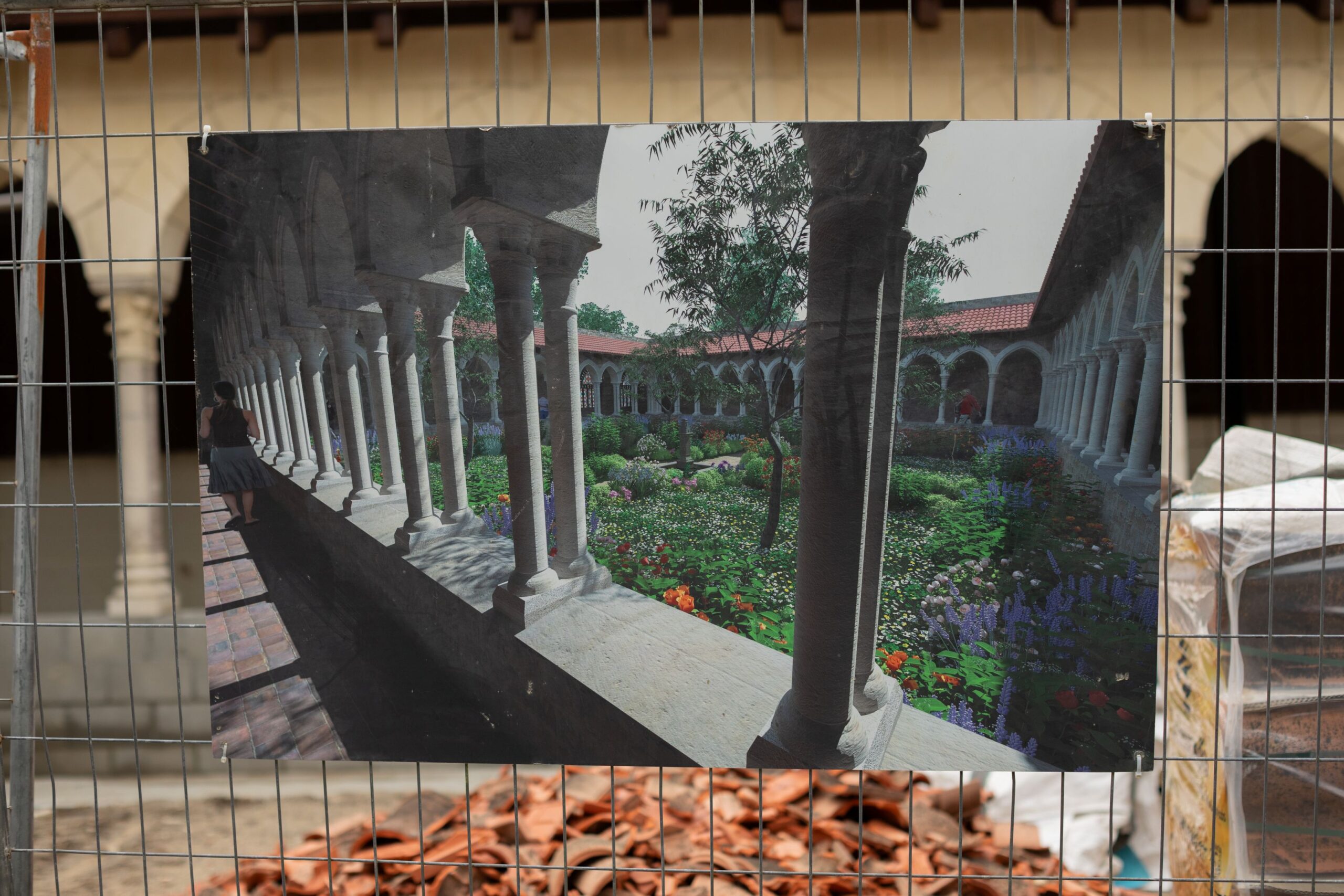
But what lies behind San Giovanni degli Eremiti still today is the cloister. This luxurious garden is the best-preserved part of the ancient medieval monastery and the inspiration for Hamilton Gardens’ 19th themed garden.
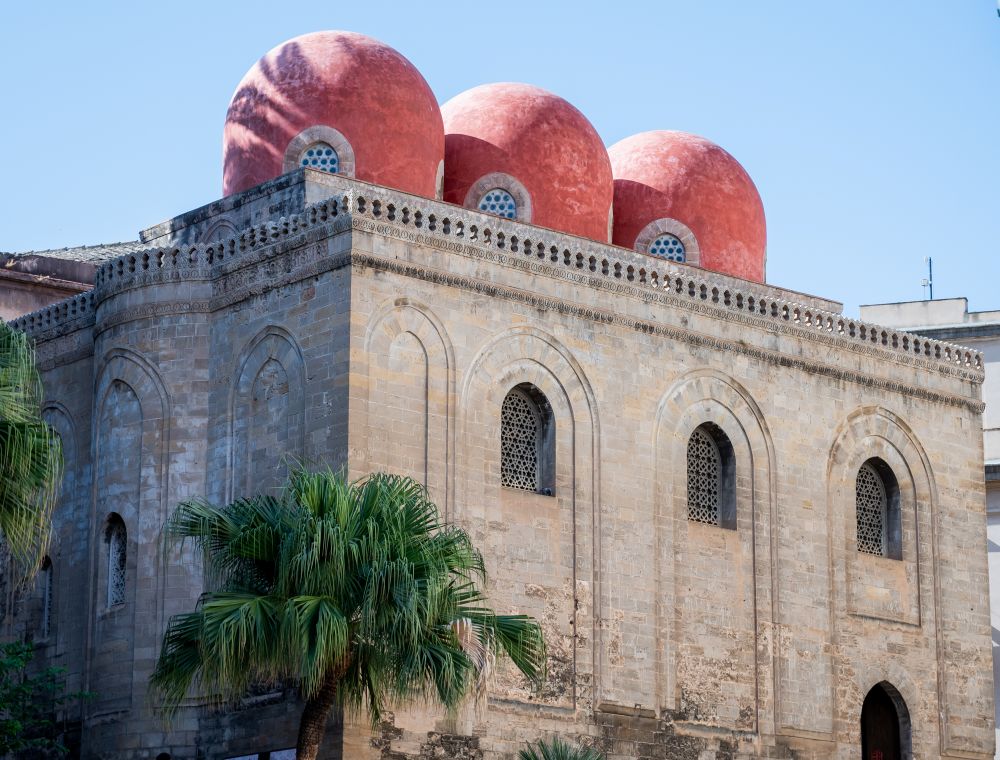
You can visit San Giovanni degli Eremiti on our Taste of Sicily tour.
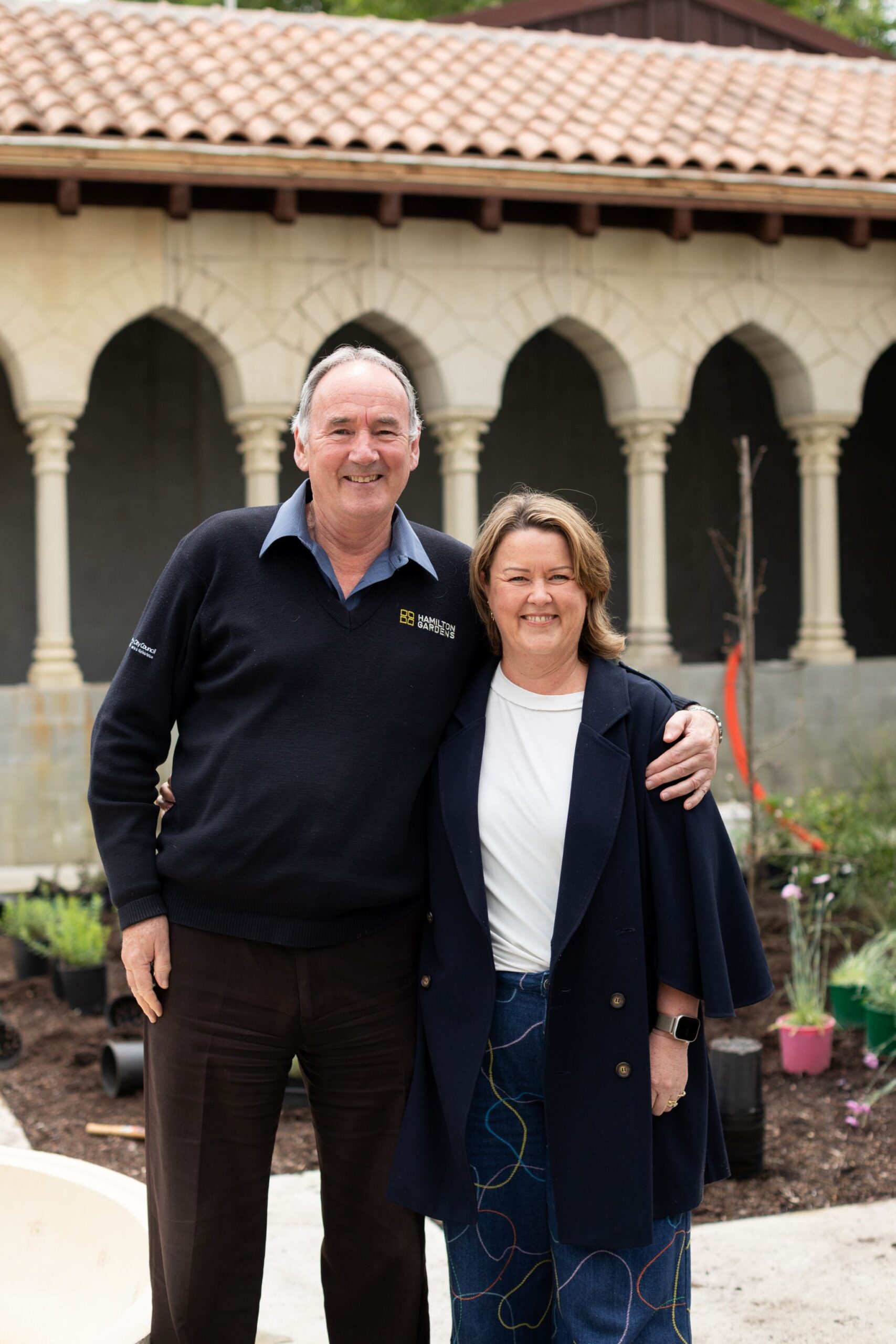
I caught up with Gus Flower, Horticulture & Operations Manager at Hamilton Gardens, to get a sneak peek of the garden before it opens to the public in mid-February. Gus, who has worked at the gardens for 24 years, says he loves working their because “they are more than a garden”.
He is quick to point out Hamilton Gardens is not a botanical garden, instead it is part history, part storytelling, part theatre, all through the art of gardens and gardening. “Passive recreation,” Gus quips. You can go as deep into the detail as you like, or you can simply enjoy their beauty and peace.
As we take the shortcut through the gardeners’ HQ to the Medieval Garden, a giant concrete structure gains my attention. This will form the central structure for the Baroque Garden, the 20th themed garden, due to open in the next few years.
Work on this garden started five years ago, with the planting of some 350 shrubs and trees around the perimeter of the garden that will give it its structure as well as screen it. This gives you a little insight into the planning and work that goes into each new garden.
There are 30 themed gardens in the long-term plan. While it is Gus’s job to forward plan and plant for these, it falls on Lucy Ryan, Director of Hamilton Gardens, to find a way to fund them. “The Medieval Garden is a milestone for Hamilton Gardens and a real community achievement. From groups like the Friends of Hamilton Gardens, the Hamilton Gardens Development Trust, and Momentum Waikato to individuals who share the vision, it’s a shared effort. Fundraising is never easy, but seeing that collective support turn into something tangible is incredibly rewarding.”
As we near the Medieval Garden, Glenn Morris and the team from Tuscany Statues are working on the six tonne bell tower that will be hoisted on top of the garden’s structure. The Medieval Gardens are a testament to their craftsmanship, as the apothecary garden, the main focus of the Medieval Garden, is surrounded by a covered archway with small double columns, decorated with beautiful motifs.
Leading on from the apothecary garden is the cloistered garth, a space that would have been used by the monks as a space for rest, recovery and contemplation. His is a space visitors can peak into, after all it is a cloistered monastery!
Here, Gus says they will mow the lawn, versus clubbing it down as would have been the way back in the monk’s time; a small concession to a garden where the details have been thoroughly researched, thought through and planned.
It turns out juniper has more uses than just in gin and was a key tree in the cloister garth apothecary garden. Much work went into trying to source a juniper plant for this garden, but Gus says they couldn’t source a European juniper, so instead they have planted Cryptomeria japonica.
Likewise, each garden would have had an apple tree in the middle, but in Hamilton’s climate these would have grown too big and shaded too much of the garden. Instead, crab apples, which give a wonderful display of blossoms and fruit, were chosen.
The garden is to be planted with authentic Sicilian herbs like fennel, mint, sage, thyme, sorrel, rosemary … “The monks wouldn’t have cared,” says Gus, but “we want to create a floral display”. To do this Nick Redshaw, the gardener in charge of the Medieval Garden, will have to jiggle things around and learn what works, all while finding a way to walk in the garden without destroying the display. This is a juggle the Hamilton Gardens have learnt from previous gardens like the Herb Garden that was opened in 1987.
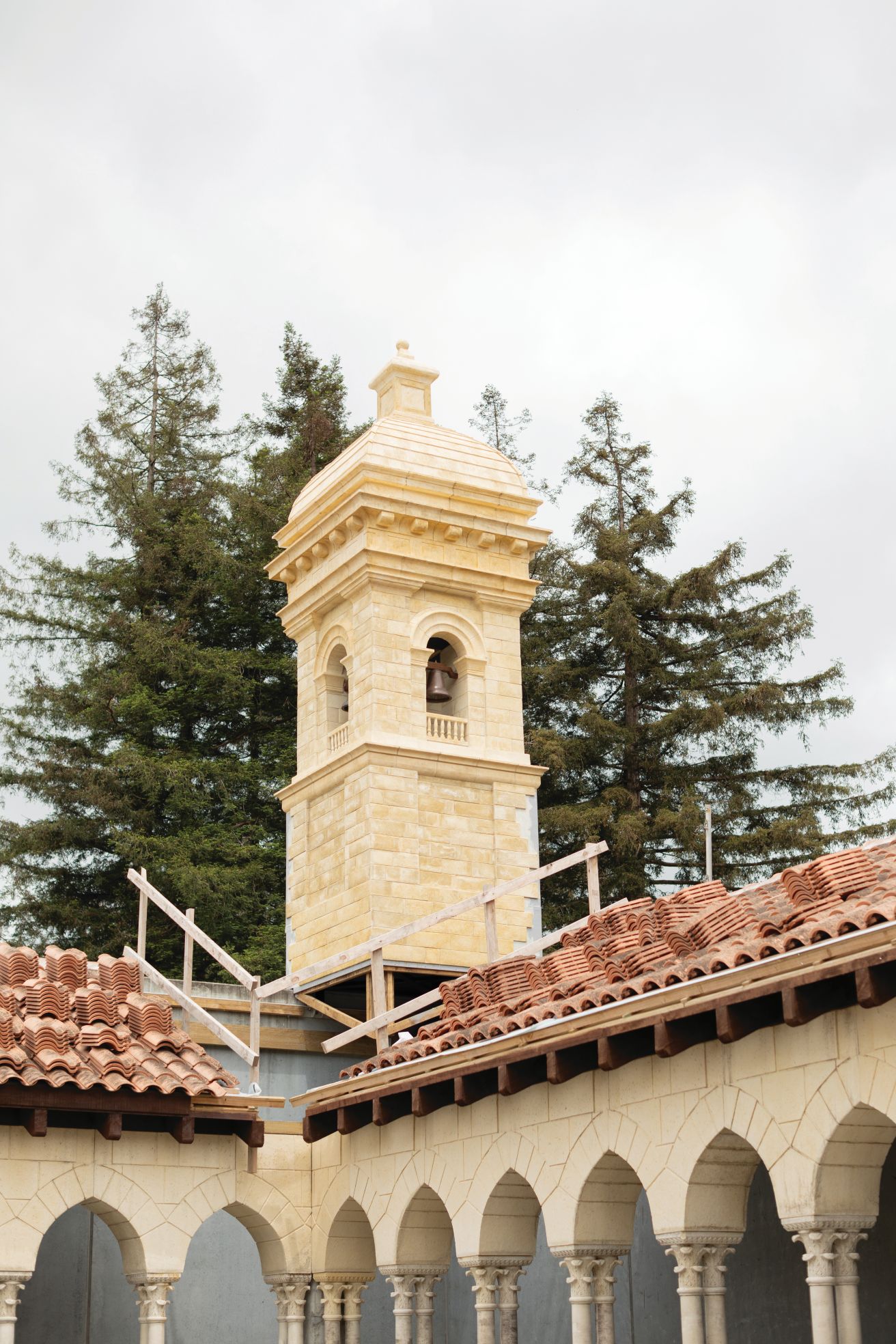
The space is capped off with a genuine terracotta tiled roof, the tiles being brought in from Spain and already looking authentically weathered. Gus has also sourced European ivy to plant in a few crevices and allow to grow “wild”.
With so many gardens to choose from, I asked Gus if he had a favourite. And like any guardian he was reluctant to pick one, noting they all change with the seasons. He did admit “right now the English Flower Garden”. The English Flower Garden opened in 1989 and has just recently had a major overhaul. Gus says he “knows how much blood, sweat and tears” have gone into reopening these gardens and “it’s almost as cool as a new garden”.
The Medieval Garden is due to open in mid 2026 but you can get a behind the scenes tour and sneek preview as part of the Hamilton Arts Festival from Friday 20 Feb-Sunday 1 Mar. Details are here: Hidden Trails & Medieval Tales – Hamilton – Eventfinda
Entry to the gardens is $20 per person, children under 15 are free. Hamilton rate-payers can gain free entrance by obtaining a MyGardens Pass with proof of residence. Find more details at hamiltongardens.co.nz