





Words Vicki Ravlich-Horan
I can’t remember ever having had a blood test that didn’t come back saying I was low in iron. I have had nurses ring me in a panic when my tests have come in. I have been turned away from giving blood because my iron levels were too low, yet no one has ever asked why. Sure, I have had iron supplements prescribed or suggested, but no doctor has ever followed up or looked at the cause of this deficiency let alone the impact on my body and life because of it.
So when I heard Dr Libby was releasing a book dedicated to iron and its effects on the body, I knew I needed to read it.
I have long been a fan of Dr Libby’s approach, with her ability to break down complicated biochemistry and the body’s mechanics in a clear and concise way while also providing some answers and practical ways to change. “My mission,” Dr Libby states, “is to educate and inspire, enhancing people’s wellbeing and wisdom, igniting a ripple effect that transforms the world.”
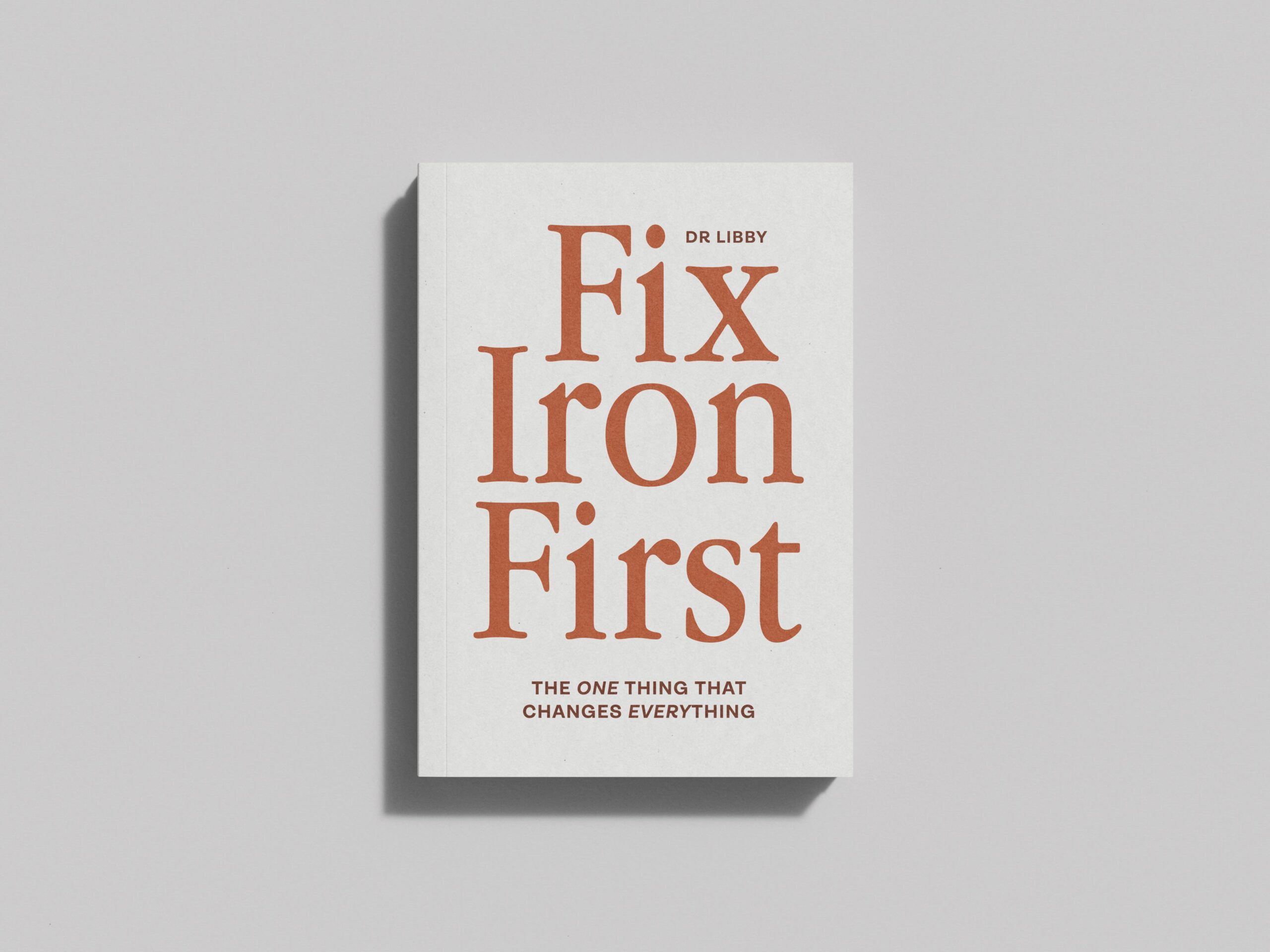
This book, Fix Iron First, is no different. Unlike some of her other books that we immediately identify with the topic (think Rushing Woman’s Syndrome) this one may seem very specific but is, in fact, broader, as she explains the essential role iron plays in our lives from birth through to menopause and beyond.
Dr Libby says the fact “that iron deficiency is the most common nutritional deficiency globally is unacceptable to me. Part of my inspiration in writing this book is to bring this topic back to the forefront of conversations so that there is far less unnecessary suffering. Too many people live knowingly or unknowingly with iron insufficiency or deficiency, not always aware of the far-reaching consequences of tolerating this deficit.”
It was Dr Libby who motivated me to delve deeper into what I had always thought was ‘normal’ after listening to her webinar series. The light bulb moment was when she said the only symptom of menstruation should be bleeding, all the others we commonly accept are not normal. I am truly grateful for this advice, as it not only made a huge difference on me, it has given me knowledge I can pass on to my daughter, so she doesn’t experience the hormonal chaos I did through my teens, twenties and thirties!
So as I enter perimenopause and I’m reading Fix Iron First, I’m having a similar penny drop experience. Dr Libby says perimenopause “is a hot topic which has led to it being blamed for almost any uncomfortable symptom experienced by women anywhere from their late thirties to their mid-fifties. Everything from weight gain to brain fog, anxiety to itchy ears, gets linked to the changes in estrogens – predominantly estradiol – and progesterone that occur during this stage in life. Yet if the changes in hormone levels were the sole driver of challenging symptoms, every woman would suffer, and this is not the case. Many women go through perimenopause with mild or few signs that they are in the midst of this transition.” She’s right! Why are some of my friends sailing through yet my hair is falling out and I can’t get a good night’s sleep?
“What if,” Dr Libby asks, “the majority of perimenopausal suffering is due to a combination of subtle or significant poor nutritional and metabolic health parameters that we can, too easily, accumulate over the first half of life? What if progesterone and estrogens have been acting as buffers, softening the experience of what’s been compounding beneath the surface up until now?”
Dr Libby says, “Often, when we feel lousy, we assume the solution to our health challenges must be complex or multifactorial. Yet, many answers are remarkably simple – and resolving iron deficiency is one of them. Iron is fundamental to countless processes within the body. Time and again, I’ve witnessed how, through restoring iron levels, so much else falls into place, sometimes in ways patients describe as life-changing. No part of the body is untouched by insufficient iron, which is why it is often the one thing whose correction can create a ripple effect, improving multiple aspects of our health.”
For over 25 years, Dr Libby has been helping people understand their bodies – and how to support them. And one deficiency has come up more than any other: iron. It affects energy, mood, sleep, thyroid function, hormones and even cognition. It is needed for growth, development, and appetite in children. Yet it’s still too often missed, misdiagnosed or mistreated with supplements that are poorly absorbed or harsh on the gut. This book is essential reading for every woman, you will take away such essential knowledge on the function of iron in not only your body but that of your children, especially your daughters.
In Fix Iron First, she not only breaks down why iron is essential at all stages of life, she covers the different types of iron, how your body absorbs it (or in many cases doesn’t), the role other minerals and vitamins like copper and vitamin A play and essentially what you can do about it.
No part of the body is untouched by insufficient iron, which is why correcting this alone can create a ripple effect. Dr Libby says, “People who have lived with exhaustion for years describe finding they can think more clearly and have energy to engage with more enthusiasm in life’s daily tasks. Some with anxiety explain how these feelings become less intense, making life far more manageable. Others share how they wouldn’t use the word anxiety any more to describe how they feel. For some, their hair stops falling out. It’s not just about fixing one symptom but rather creating a chain reaction that enhances your overall wellbeing.”
Alongside the book, Dr Libby has also released Bio Blends Iconic Iron. Made from organic peas, it is an entirely plant food-sourced iron supplement – the first (and only) of its kind globally. The result of eight years of research and five years of development, Iconic Iron contains ferritin iron which has a unique absorption mechanism that overcomes the usual hurdles to robust iron absorption, making it highly bioavailable and friendly on your gut.
“Your body is not something to fight against or ‘fix’. It is a masterpiece – resilient, wise, always working for you. Nourish it, trust it, listen to it and watch how it transforms in response to care, rather than deprivation and judgement.” Dr Libby