


Words Denise Irvine, Images Ashlee DeCaires
If you ask jeweller Paul Briggs to describe the magic of diamonds he draws on five decades of experience for his reply: he says they have retained their sparkling allure through countless generations, they are symbols of romance, permanence and enduring love.
They’re known for their indestructibility – the hardest naturally occurring stone in the world – and they have slipped into the language with many diamond-related quotes and phrases on love and strength. Diamonds truly are forever.
“It is a beautiful stone,” says Paul, “and some women may wear their diamond engagement ring for 50 or more years. We have customers now bringing in their mother’s or grandmother’s rings that they’ve inherited and we’re remodelling these for another generation.
“Diamonds are extremely hardy and even if we occasionally get one that has been chipped, it can be re-polished and re-cut. There are not many things that last that length of time.”
Paul shows some of the diamond rings he has designed and custom-made, including a dramatically pointed marquise-cut diamond, a classic solitaire, and a cluster setting, all of them shining in his showcases.
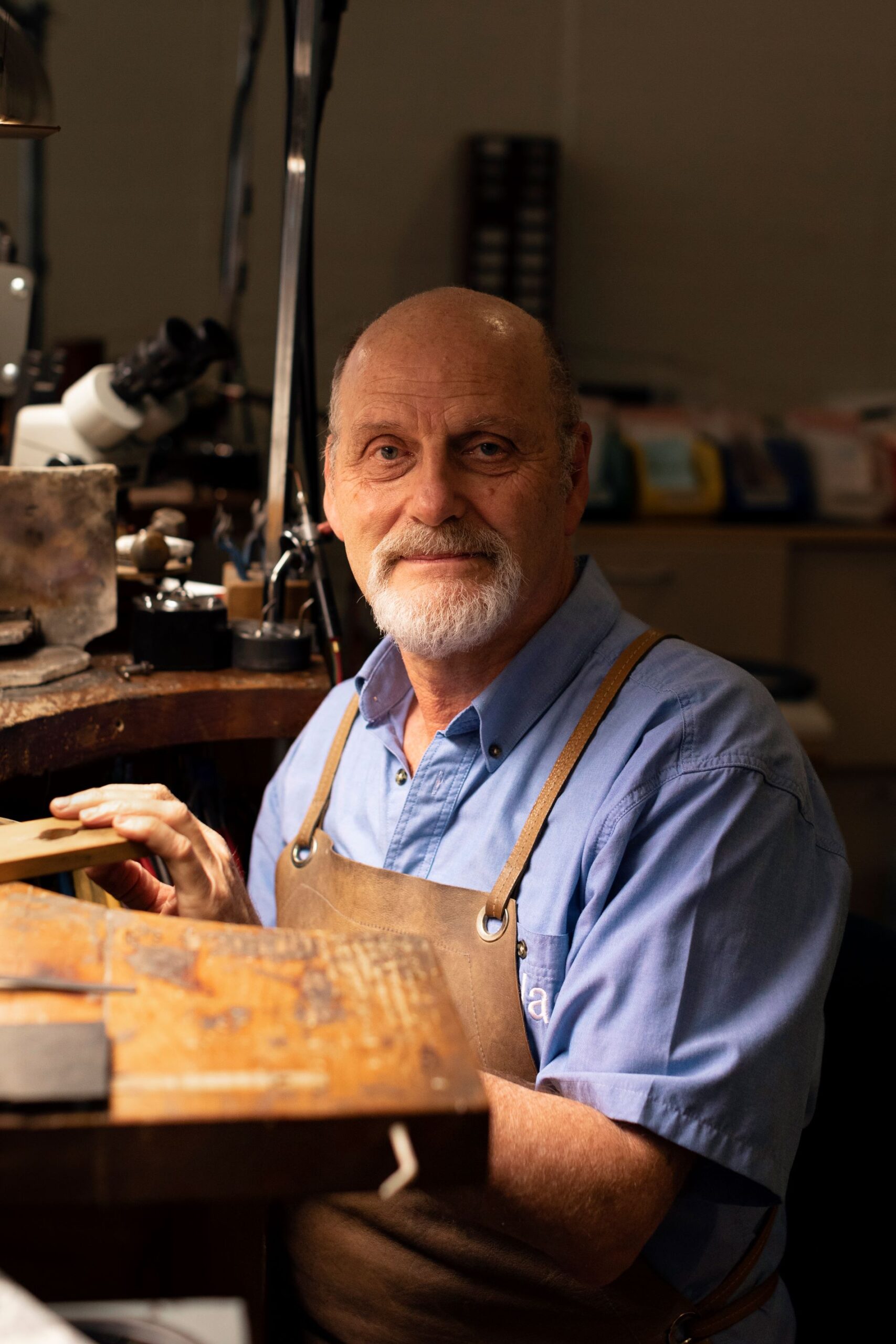
Paul Briggs is a manufacturing jeweller – something of a rare breed – and he is the co-owner with wife Suzanne of Midas Diamond Jewellers on Hamilton’s Barton St. Along with their “amazing loyal staff” they design, make and restore precious pieces for clients, and Paul and Suzanne (and Midas) have been in business in Hamilton since 1984.
Today Paul is providing some background on natural diamonds, which he says remain top choice for engagement rings and other significant pieces of jewellery.
The precious stones begin life in mines in countries including Australia, Alaska, South Africa and some other African nations, places where there has been ancient volcanic activity. They are found at great depths, where through intense heat and enormous pressure, over millions or billions of years, carbon has crystallised to form diamonds.
“Diamonds are essentially carbon, which is basically coal,” Paul says, “and nature does the amazing job of turning it into a thing of great beauty under pressure and heat.”
He says rough diamonds from the mines are bought in parcels at auction by international diamond cutting companies. Their experts cut and polish them, turning the raw material into the gems used in jewellery. These are sold to diamond merchants, also based overseas, and Paul buys cut diamonds from them, dealing with a handful that he has built relationships with.
He assesses stones for purchase according to the well-rehearsed properties of the four “Cs”: cut and polish; clarity; colour (the whiteness); and carat (the unit of weight for measuring gemstones). Each of the four “Cs” is rated on a numbered scale and Paul’s practised eye and techniques will tell if he’s looking at a beauty, or not.
The cutting, he says, is the thing that makes a diamond stand out, sparkle like a prism. The multi-faceted round brilliant cut displays the most light and is still the most popular, but other cuts like emerald and cushion are also much admired.
Nowadays, Paul says most of his customers do their own online research on diamonds, and become knowledgeable on the subject before shopping for a ring. “But you still need a jeweller’s expertise to assess the quality of the diamond, and if a design is going to work.”
Most of his bespoke rings have a half-a-carat to a carat diamond. He says if you want to show the diamonds off, let them speak for themselves, you need less metal. “You don’t need a big heavy ring if you have a beautiful diamond. A simple stone and band can look stunning. I like to help people achieve something beautiful.”
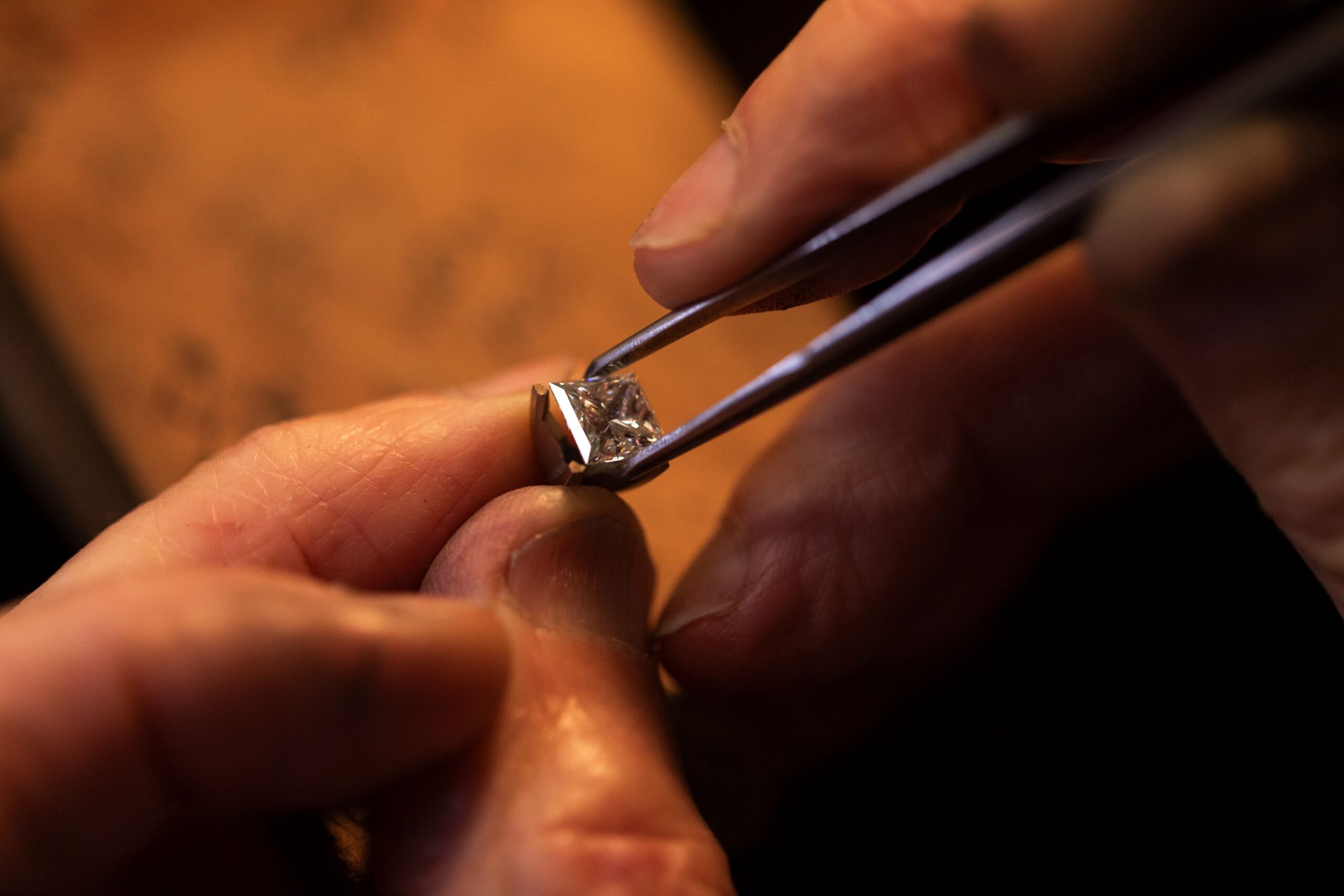
Paul says a custom-designed ½ carat natural diamond ring that is fine white, flawless, and has an excellent cut could retail between $3000-$7000. There are, of course, less expensive – and more expensive – options, and budget typically pays a significant part in his customers’ choices.
Which leads us to talk about the emergence of lab-grown diamonds worldwide: these are also made from carbon but achieved artificially rather than found in their natural habitat. They look good, have the same optical properties as natural diamonds, are considered environmentally friendly, and are significantly less expensive than natural diamonds.
Paul says they take days to make rather than being blasted out of rocks with dynamite, hence the price difference. “They offer an alternative and that is a good thing. I still prefer natural diamonds but times are changing and lab-grown diamonds are increasing in popularity.”
He recently made a ring for a client with a pear-shaped diamond set beside an emerald cut diamond. Both gems were lab-grown, around 2 carats each. He shows a photograph of the finished work. “It looked spectacular.”
Diamonds are forever: Midas offers a complimentary professional ring cleaning and inspection service for their clients, which helps keep them sparkling and splendid.