




Words by Vicki Ravlich-Horan, Images by Ashlee DeCaires
Throughout the Mediterranean, capers grow wild. I remember my first visit to Sicily and having a lush caper bush growing with abandon down a rocky wall pointed out to me.
After that, I saw them everywhere. And this is something I point out to my hairdresser, Paul Fitch from Mousey Brown in Hamilton, every couple of months when I sit down to have my hair cut. These regular trims always come with chats about what and where we have been eating. Over the last two years they have also included a caper update.
Paul says the Fitch family love capers so much they buy them in 2kg pails. They sprinkle scrambled eggs with capers, top pizza with them, “pretty much add them to everything”, admits Paul.
Our first caper conversations were with Paul trying to source the seeds. It started with a Trade Me find and a little bag that arrived in the mail, which Paul says looked like dust. Needless to say, they didn’t germinate. His next source was Italian Seeds Pronto, with a decent number of seeds in the packet, giving, as Paul says, “a few to play with”.
With the seeds procured, the challenge was then to get them to germinate. I have suggested he get a lizard and feed them the seeds. This apparently is how many are spread in Sicily – the lizards eat the seeds then deposit them in a rock or crevice. From here they grow and flourish.
Instead, Paul placed his seeds in the fridge for around a month, then scarified them. This is the process of roughing the outer layer to free the germ inside. Then it’s a matter of time, with seeds taking 4+ months to germinate. Most people fail because they give up too soon.
Not Paul! Not only was he willing to wait, he had also spent many hours online uncovering others that have been successful, talking to MPI and generally falling down a rabbit warren of capers. The great gardener and writer the late Virgil Evetts proved helpful, if not just for proof it could be done.
There was an old article online of a couple in Greytown that had flourishing plants, more evidence it could be done. A woman in Auckland he connected with via an online forum suggested he just put the seeds outside under the eaves of the house and wait. This finally yielded results, and Paul nursed seedlings over the winter months on a heat pad in the kitchen window, only to forget to water them last month.
“It’s a heartbreaking story,” admits Paul, who isn’t ready to admit defeat. “It’s a ten-year plan,” he says, laughing. Finding someone with a flourishing plant to take a cutting from is now the plan. Once the bush is established it is apparently indestructible, coping with frosts and soaring heat.
If you are after a new do with some caper chats, give Paul at Mousey Brown a call.
Or if you have had success with capers, Paul would love to know.
mouseybrown.co.nz
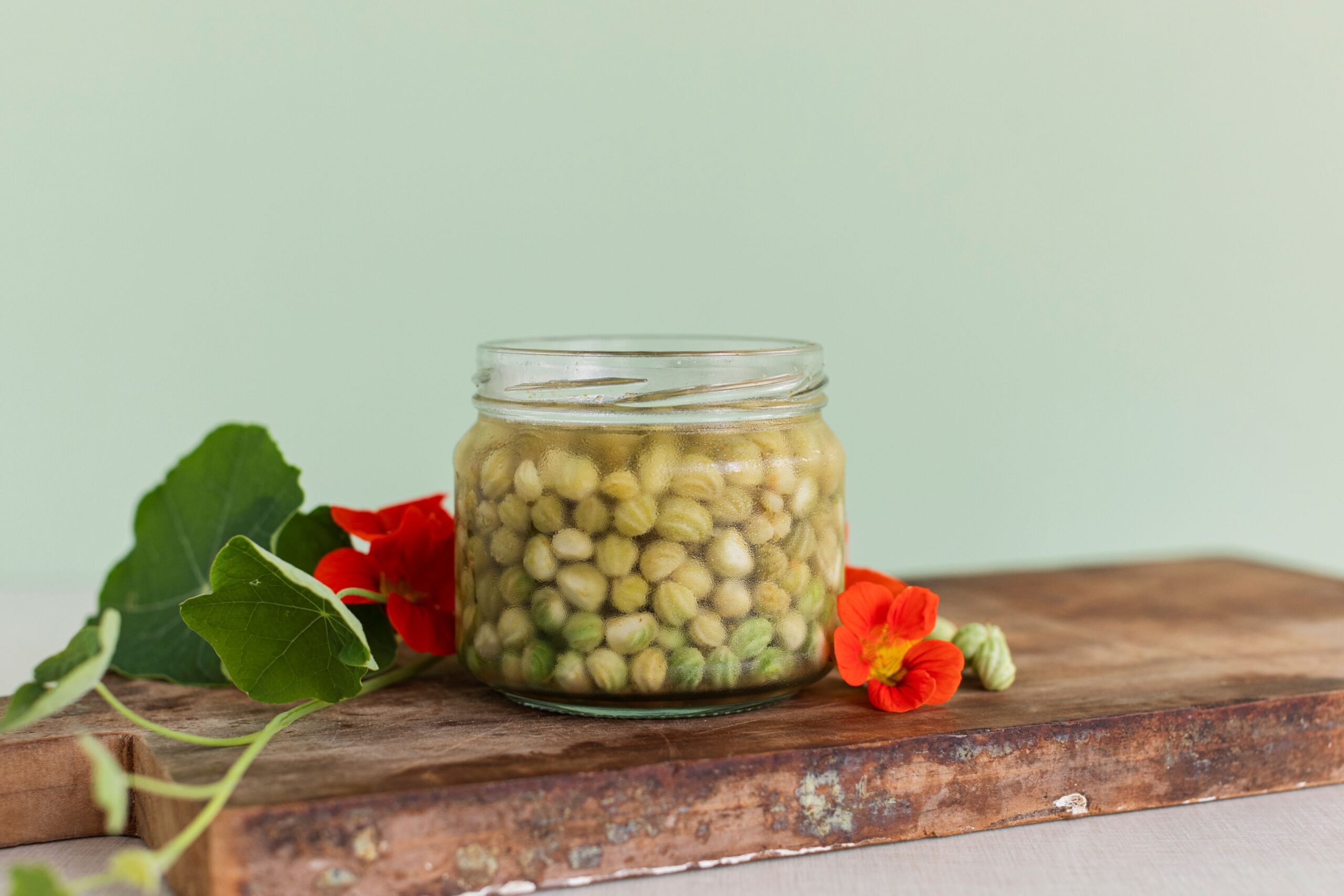
Poor Man’s Capers/Pickled Nasturtium Seeds
I have secretly been encouraging Paul’s caper with capers, hoping if he was successful, I would benefit from perhaps an excess plant. I share his excitement at growing them, just not his perseverance. So with Paul’s capers not looking fruitful, I turned to the nasturtiums that were taking over my garden.
These poor man’s capers may not be the real deal. Paul says, “They are like an e-bike.” In my defence, e-bikes are more and more popular. And while I hold out for the real deal, these are a good lesson in using what you have.
I personally like that they are crunchier than capers, so great in salads.
Unlike capers, which are the flower bud, you are using the nasturtium seeds, so after the flower has bloomed.
1 cup nasturtium seeds, still firm and green
1 cup white wine vinegar
1 tsp salt
1 tsp sugar
herbs & spices – dill, bay, celery seeds, allspice, peppercorns …
Rinse and drain nasturtium seeds and blot them well on paper towels.
Pour seeds into a one-pint canning jar.
Bring vinegar, salt, sugar and herbs and spices (I used dill and peppercorns) to a boil and pour over seeds.
Seal and refrigerate jar, then let sit for about three months.
Tip
- A little bit goes a long way when it comes to these flavourful little buds. Taste as you go; you may not need as many of these capers as you think.