


Recipe and images by Julie Le Clerc
For me, there’s something undeniably special about the time-honoured tradition of making a Christmas fruitcake. While it’s advisable to do this as early as October – or even late September – it’s not just about getting ahead; it’s about giving the cake time to mature and develop deep, complex flavours.
A proper Christmas cake is packed with dried fruits, nuts, spices, and a generous splash of booze – brandy, rum, or whiskey are popular choices. The magic happens as the cake ages, because the most pleasing flavours take time. Over numerous weeks, the cake needs to be regularly ‘fed’ with a little more alcohol, keeping it moist while intensifying the flavours.
This slow, thoughtful process is part of what makes English-style Christmas fruitcakes so special. It’s a ritual of patience in a season that’s often rushed. Baking it early allows the cake time to settle, evolve, and become something truly celebratory. It’s also practical – come December, when the festive season kicks into high gear, the cake is already resting and ready, leaving you free to focus on all the other seasonal preparations and festivities.
While the tradition may feel old-fashioned to some, it’s quietly making a comeback among modern bakers who appreciate the slow-food mindset and the sense of connection and anticipation that comes with making something well ahead of time. Baking a Christmas cake in October is more than ticking off a to-do list – it’s a delicious, fragrant promise of celebrations to come.
And when Christmas finally rolls around, there it is – beautifully aromatic, dark, rich, and delicious. Some love it plain and rustic, others go all out with a snowy layer of icing. Either way, slicing into a well-aged fruitcake is like unwrapping a present – dense with fruit, spiced just right, and filled with the kind of flavour that only comes with time.
Conversion from round to square cake tins or vice versa
Use a round cake tin that is one size larger than a square tin for any given recipe. For example, a 20-cm round cake tin converts to an 18-cm square tin. Bear in mind that cakes in square tins may take a little longer to cook, so adjust the timing and check regularly towards the end of the cooking time.
How to store fruitcakes
Wrap in greaseproof paper (not plastic wrap, as this can make the cake sweat and attract mould), and then in foil. Store in a cool, dark place.
Traditional Christmas Cake
Even though fruitcake is traditionally shared at Christmastime, I’ll happily make one at any time of year because I can’t resist the rich, fruity flavours. As it lasts so well, it’s great to have on hand to simply slice off slivers and enjoy with a nice cuppa.
300g raisins
300g sultanas
200g chopped pitted dates or prunes
200g currants
½ cup dry sherry
250g butter, softened
1¼ cups firmly packed brown sugar
4 large eggs
¼ cup orange marmalade
2 tbsp treacle
35g raw almonds, chopped
1½ cups plain flour
½ cup self-raising flour
1 tbsp cocoa powder
1 tbsp mixed spice
70g whole raw almonds, to decorate (optional)
brandy or whiskey to ‘feed’ the cake
To make this cake, you will need to start preparations the day before. Place all the dried fruit in a large bowl. Pour over the sherry and stir to combine. Cover bowl with a clean cloth and leave fruit to soak for 24 hours, stirring once or twice over this time.
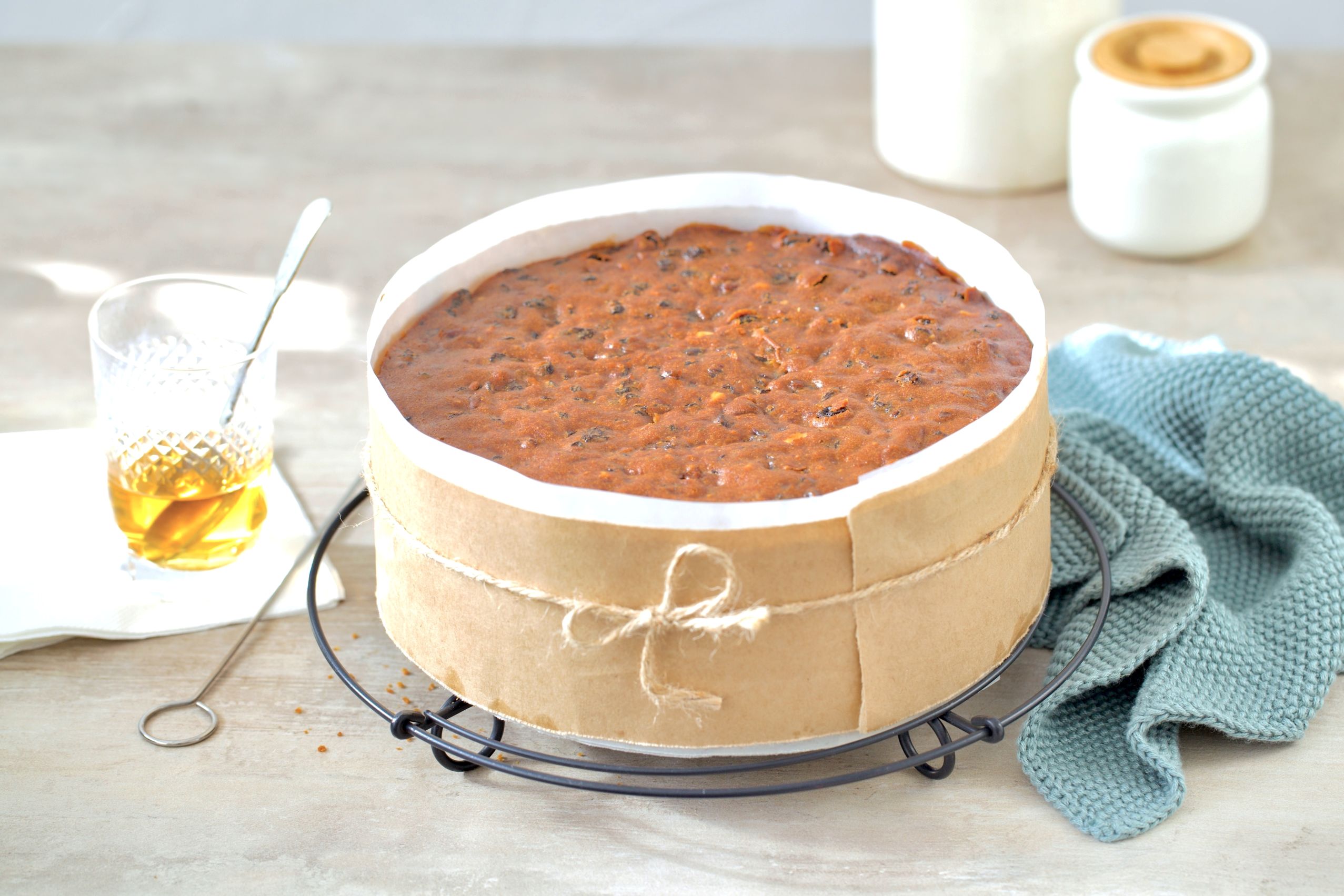
Next day, preheat oven to 150°C conventional (130°C fan bake). Grease a deep-sided 20-cm round cake tin and line the base and sides with a double thickness of baking paper. The paper should come up higher than the sides of the tin. Wrap a layer of brown paper around the outside of the cake tin to protect the cake from over-browning and drying out during the long baking time. Tie in place with kitchen twine.
Place butter and sugar in a large mixing bowl and beat with an electric mixer until pale and creamy. Beat in the eggs, one at a time (the mixture may split at this stage but will come together later). Add the marmalade, treacle, chopped almonds, and the soaked dried fruit, and stir to combine.
Sift flours, cocoa and mixed spice over the fruit mixture and stir to combine. Spread mixture evenly into prepared tin. Drop the tin from a height onto the bench to settle the mixture and avoid large air bubbles in the finished cake. Decorate with whole almonds, if desired – though if you plan to ice the cake then it’s best to leave the almonds off.
Bake, uncovered, for 3½–4 hours, or until a skewer inserted in the centre comes out clean. Remove from the oven to cool in the tin.
Once cold, ‘feed’ the cake by making small holes in the top and bottom with a skewer, then drizzle with a couple of tablespoons of brandy, or whiskey. Wrap the cake up and store in an airtight container. You can now ‘feed’ it at odd intervals – say every 1–2 weeks – until you need to ice or eat it.