




Words Vicki Ravlich-Horan
Unlike their flavour, the definition of a spice is a little weak. In essence, the leaf of a plant used to flavour food is an herb when every other part of the plant would deem it a spice, think cinnamon bark or root ginger, seeds, pods, berries and buds.
While almost always sold in a dried form (the exceptions being turmeric and ginger), spices won’t last indefinitely. Their flavours will dissipate over time, especially if already ground, exposed to light and air. So buy fresh quality spices in the beginning, store them in airtight containers and, most importantly, use them!
Liz Cerdeira from Vetro says, “I find it is always good to have a good ‘smell test clean out’ every now and then and do a restock of those that are no longer giving off that wonderful spice smell they should be. But if you have no option when using older spices, try dry roasting them to bring out more flavour.”
If you’re keen to add more spice to your food, here are few of our favourites.
Allspice
Allspice, not to be confused with mixed spice, got its name in the seventeenth century when Europeans decided it tasted like a combination of cinnamon, nutmeg and clove. This dried berry is native to West Indies and Central America and a relative to the clove. Often used in savoury food as a flavour enhancer – I believe it quite possibly could be the eleventh herb and spice in an American colonel’s famous recipe. It’s also a spice found in Jamaican jerk seasoning and Swedish meatballs.
Cardamom
Testament to the power of smell and taste, cardamom is a spice I love, as it reminds me of my grandmother who added it to her spice fruit loaf. Like many spices, you can buy ground cardamom, but the pods are so much better! A member of the ginger family, indigenous to southwest India, cardamom has a warm, sweet, floral and fruity flavour often found in Nordic baked goods (think Cardamom buns) and Arabic coffee along with many Indian curries.
Cinnamon
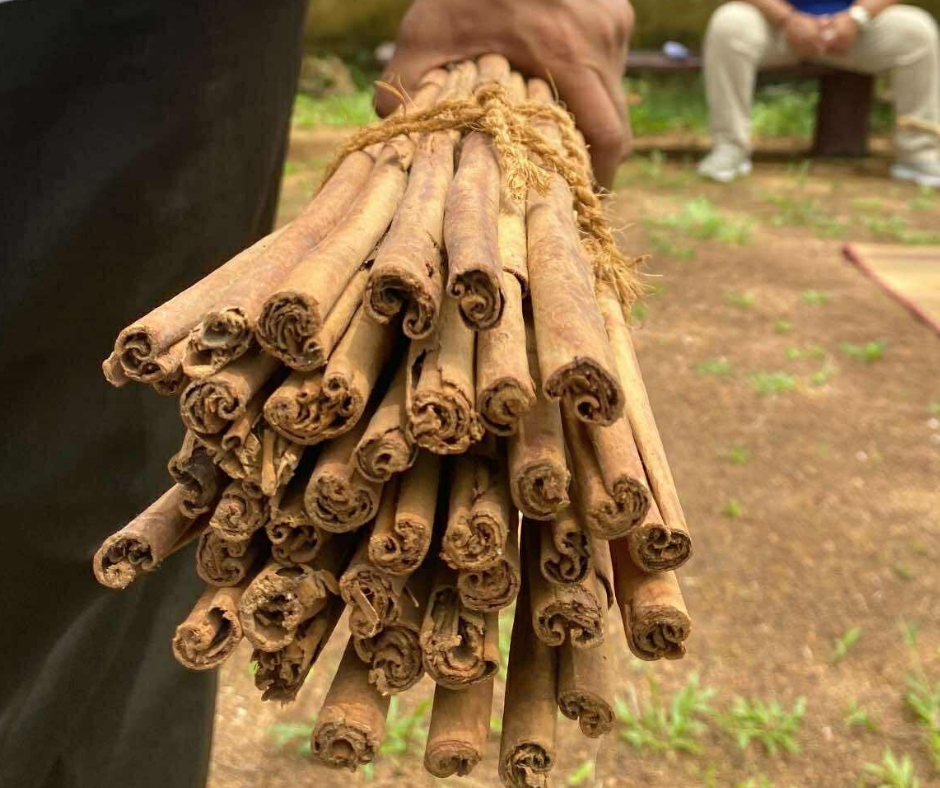
In New Zealand, more often than not, what is labelled cinnamon is in fact cassia. Both are made from a thin layer of bark rolled to make quills or ground.
Cassia has dark, thick, coarse quills, and a bittersweet, spicy flavour, while true or Ceylon cinnamon has brittle, smooth quills with a single spiral and a more delicate, floral flavour with hints of clove.
Liz says they stock both, labelling Ceylon cinnamon ‘premium’ cinnamon, and this is the one they recommend if taking cinnamon for health purposes.
“Cinnamon is probably one of my favourite spices, as it works both in sweet and savoury dishes. There really is nothing better than cinnamon infused dishes – be it preserved figs with cinnamon and ginger, mulled wine or that hint in a Mexican dish.”
Mace
Hard to find in New Zealand, mace is the lace-like coating that envelops the seed that is nutmeg. While similar in flavour to nutmeg, mace imparts a more delicate, yet distinctly piquant flavour. This makes it a wonderful choice for a variety of dishes, adding a subtle, warm spiciness that is both nuanced and comforting.
Like nutmeg, freshly grated mace is by far the best, that is if you can get your hands on the dried blades vs ground version. These can also be added to cooking like you would a bay leaf to subtly enhance stocks, rice or stews.
Use in creamy desserts (custards, rice pudding or even chocolate mousse), sprinkle on your cappuccino or add into your cinnamon sugar for French toast.
See, experience and taste true cinnamon and fresh mace on our Taste of Sri Lanka Tour with Emma Galloway in 2026.
Sumac
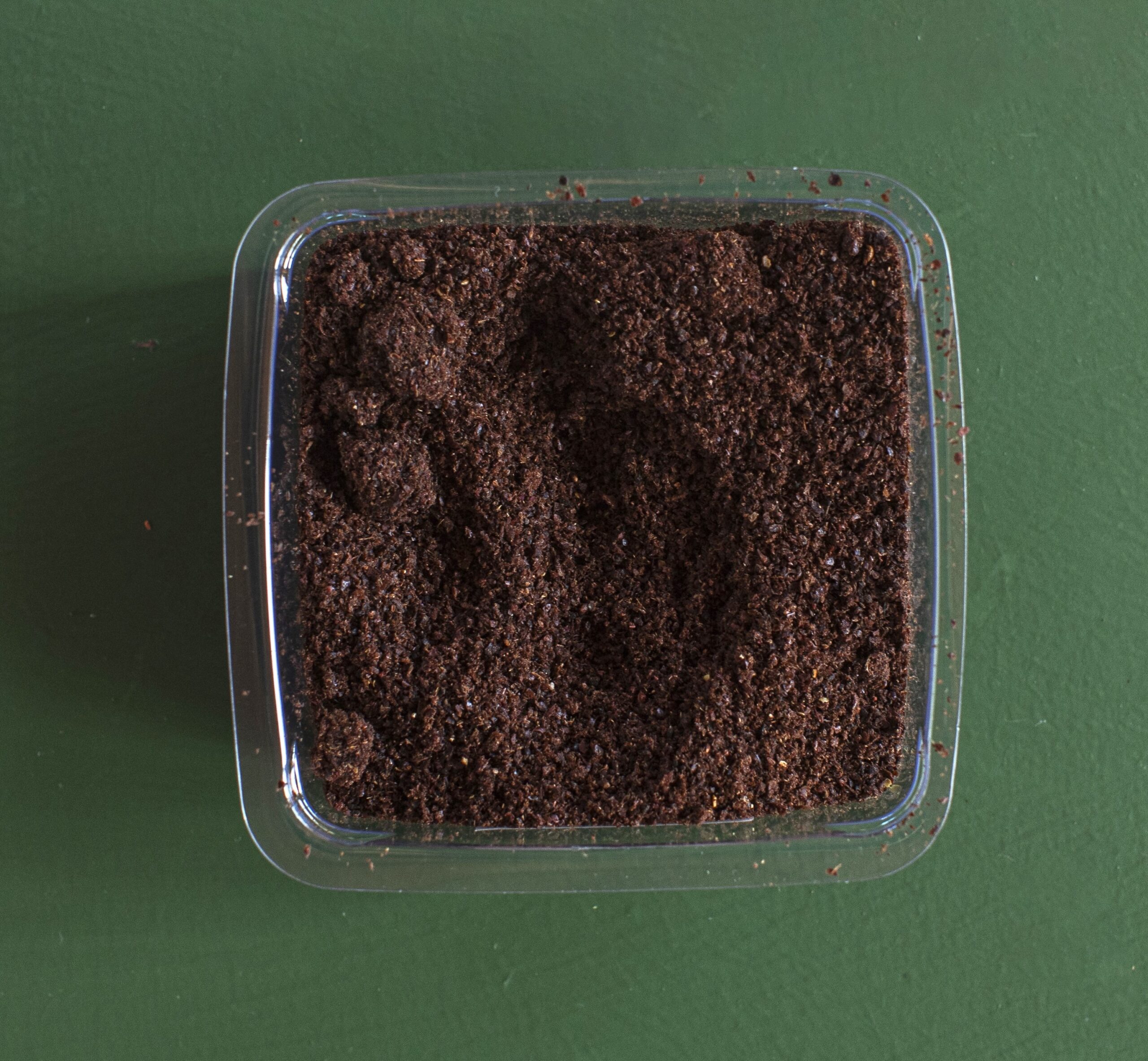
Like salt, acid is a chef’s friend, which is why sumac is such a versatile spice. Sometimes described as a ‘dry acid’ it helps to bring out the natural flavours in many foods. Made from dried and crushed sumac berries, it has a tart, citrus-like flavour with sweet and earthy notes and is an essential spice in Middle Eastern and North African cuisines.
Add it to marinades and meat rubs, sprinkle on hummus or your avo toast, in salads or mix with a simple syrup to make a cheats lemonade.
Celery Seed
Celery seed is literally the seeds of the celery plant. These teeny-tiny seeds unsurprisingly have a strong celery flavour. Used as a flavouring in ancient Mediterranean cuisine, and as a medicine in ancient China, celery seed is great in pickles, sausages and soups, or blend with salt to make celery finishing salt.
Aleppo Pepper
Originally from South America, the Aleppo pepper is the third most commonly used spice after salt and black pepper. I know, hard to believe here in New Zealand where we have hardly ever heard of it. But like the tomato and potato, introduced to the world from South America, it has been adopted by many for its versatility.
Unlike other chillies, the Aleppo pepper has a warm fruity flavour with only a mild chilli heat, which makes it the perfect addition to many dishes, from scrambled or Turkish eggs to salads to marinades, grilled fish, chicken or vegetables.
Also known as Halaby pepper, you can replace Aleppo pepper with ancho chilli or a combination of sweet paprika and cayenne pepper.
Mixing it up
Many regions around the world have a signature spice mix that encapsulates the flavours of their cuisine. Here are a few to try.
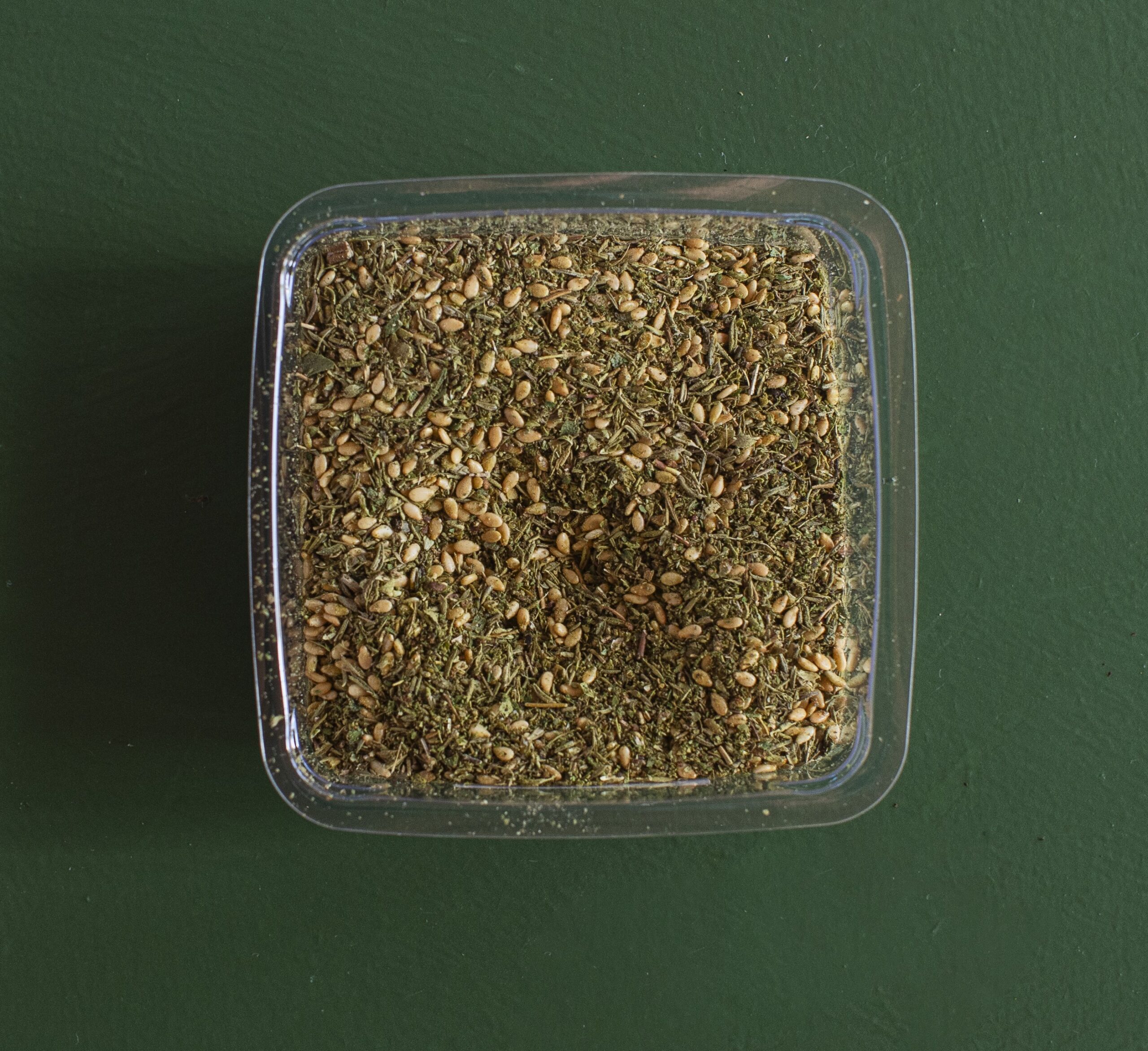
Za’atar is made from a blend of marjoram, oregano, thyme, sesame and sumac and is delicious sprinkled over hot flat breads, hummus and roast vegetables. Add olive oil for a dip or to brush over meat.
Baharat means spice in Arabic. Much like garam masala in India, baharat will vary from region to region but is usually a combination of black pepper, cumin, cinnamon, and clove. It is particularly good with lamb!
Harissa powder is a blend of smoked chillies and warm spices like cumin, coriander and caraway seeds. Add a liquid and use like you would the paste. It’s particularly good on chicken but also a lovely way to spice up some roast spuds.
Ras el hanout which means ‘top shelf’ in Arabic is a complex, aromatic spice blend famously associated with Moroccan cuisine. Again, the recipe for ras el hanout will vary. It often includes cardamom, nutmeg, anise, mace, cinnamon, ginger, various peppers and turmeric. Essential when making a tagine, but also a lovely mix to rub over meat.
Can’t find a particular spice, even among Vetro’s extensive range? Just ask the team. They are happy to see if they can source it for you.