




WORDS AND IMAGES JULIE LE CLERC
Minestrone is the kind of dish that reminds a cook why they fell in love with food in the first place. It’s generous, adaptable and bursting with goodness. A true Italian classic, this rustic soup isn’t about precision – it’s about intuition, about using what’s in season, and about coaxing the best out of simple ingredients. The word minestrone comes from minestra, which simply means soup, but don’t let the simplicity fool you. There’s a reason minestrone has been a staple in Italian kitchens for centuries: it transforms humble ingredients into a deeply pleasing meal in a bowl.
Minestrone isn’t just soup – it’s an experience, an invitation to slow down and appreciate the process of cooking. The act of chopping, stirring, and simmering feels almost meditative, a welcome break from the fast-paced demands of modern life. It also lends itself beautifully to sharing. A big pot of minestrone means there’s always enough to go around, whether it’s feeding a busy family or a gathering of friends. And like many good things, it only improves with time, the flavours deepening and mingling overnight, making leftovers something to look forward to.
One of the great joys of making minestrone is that there’s no single way to do it. It’s the ultimate seasonal dish, changing with the availability of fresh ingredients. A winter minestrone, thickened with starchy root vegetables, hearty greens, and borlotti beans makes sense. While a spring version will be light and brothy with fresh zucchini, green beans, and basil. Whatever the approach, minestrone is a lesson in resourcefulness, encouraging cooks to embrace what’s available rather than follow a rigid recipe.
The foundation of a great minestrone is patience. It usually starts with a slow, gentle cook of onions, carrots and celery, which builds the aromatic backbone of the soup. This step can’t be rushed; the vegetables need time to soften and sweeten, creating a depth of flavour that carries through every spoonful. Then comes the layering of ingredients: the tomatoes releasing their bright acidity; the beans, such as cannellini or borlotti, adding earthiness; and the pasta or rice bringing body. Each addition is an opportunity to taste and adjust, to balance saltiness and sweetness, richness and freshness.
Seasoning is where the magic happens. A sprinkle of Italian herbs – think oregano, thyme, or rosemary – elevates the flavours, while a Parmesan rind simmered in the pot adds an extra layer of savoury richness. I save the rinds in the freezer; they’re a game-changer for soups like this. And a swirl of good olive oil or a dollop of pesto added at the end will give the soup a fragrant lift.
From a cook’s point of view, minestrone is a perfect example of what makes cooking so rewarding. It’s a dish that connects us to tradition, to the rhythm of the seasons, and to the joy of nourishing others. It teaches us that great food doesn’t have to be complicated; it just has to be made with care. Whether served with a crusty loaf of bread or simply on its own, a well-made bowl of minestrone is a reminder that sometimes, the simplest dishes are the most satisfying.
RED MINESTRONE
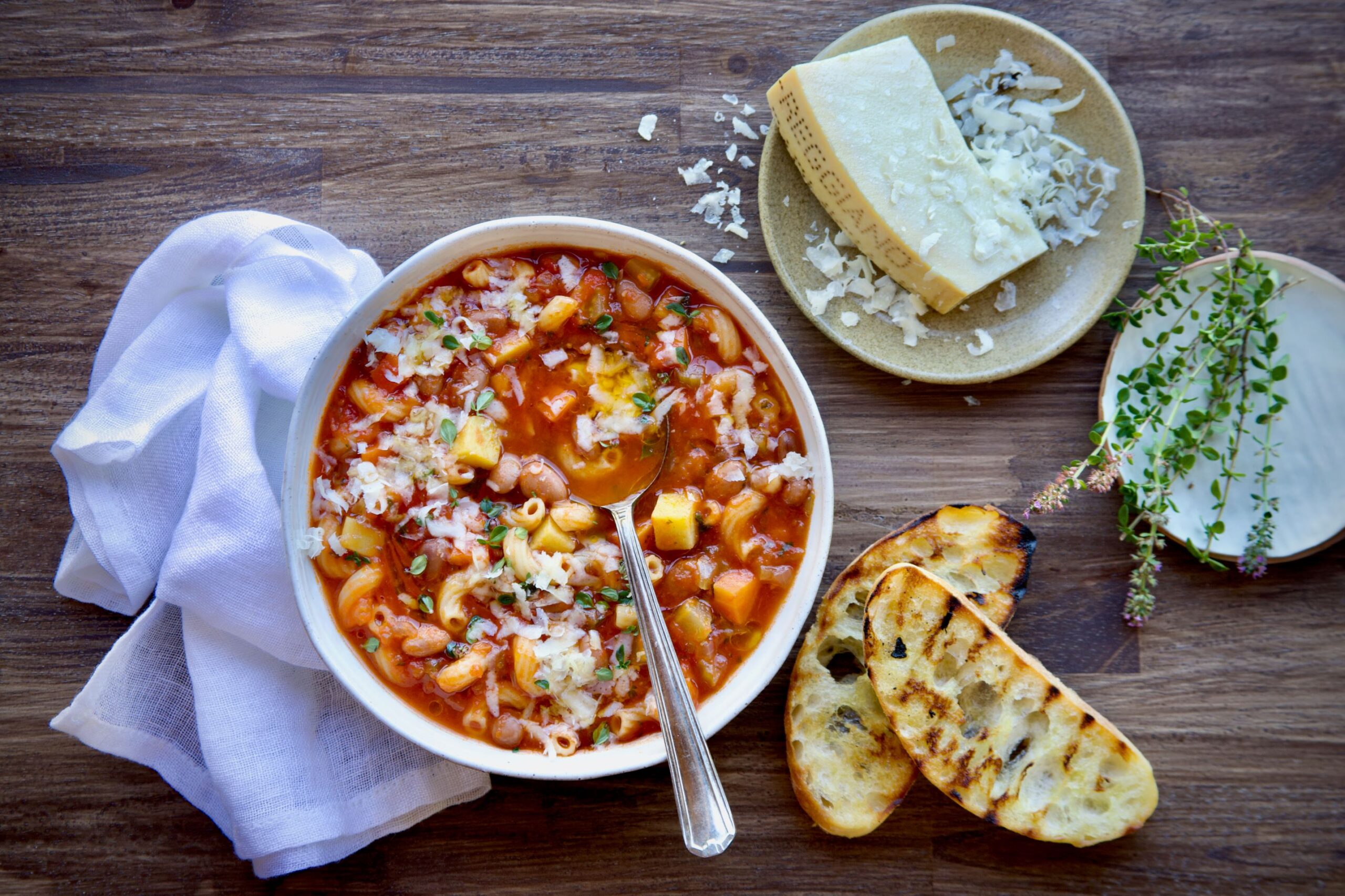
Minestrone typically includes some kind of beans, pasta or rice, as well as vegetables, and the ingredients are always left chunky – it’s never blended. As all the wholesome ingredients are so full of flavour, it’s possible to simply add water instead of stock, which makes this an economical meal in a bowl.
Serves 10–12
2 tbsp olive oil
1 large onion, chopped
2 cloves garlic, crushed
2 large carrots, peeled and diced
2 sticks celery, diced
2 x 400g can crushed tomatoes
2 tbsp tomato paste
2 bay leaves
3 sprigs of thyme
4 cups liquid vegetable stock or water
1 large potato or kumara, peeled and diced
100g dried pasta, such as macaroni or small shells
400g can borlotti beans, drained
handful flat-leaf parsley leaves, roughly chopped
To serve:
Freshly grated Parmesan cheese
Extra virgin olive oil
Crusty bread, if desired
Heat olive oil in a large, heavy-based pot set over medium heat. Add the onion, garlic, carrots, celery and a little salt, and cook for 10 minutes, stirring regularly, or until the vegetables have softened.
Add the tomatoes, tomato paste, bay leaves, thyme and stock or water and bring to the boil. Now add the potato or kumara, and the pasta, cover the pot and simmer for 10–15 minutes, or until the pasta is just cooked and the soup has thickened to your liking.
Stir in the borlotti beans and parsley and cook for a couple of minutes, to heat through. Taste and adjust seasoning with salt and pepper. Serve topped with grated Parmesan and a generous drizzle of extra virgin olive oil.